


Independence Award 2026 Honourees: Dr. Zafrullah Chowdhury and His Lifelong Fight for Affordable Healthcare

Independence Award 2026 Honourees: Dr. Zafrullah Chowdhury and His Lifelong Fight for Affordable Healthcare
The government’s decision to honour Dr. Zafrullah Chowdhury with the Independence Award 2026 has once again drawn attention to one of the most influential figures in Bangladesh’s public health movement. The late physician and activist, widely known as the “doctor of the poor,” spent decades fighting for accessible healthcare, affordable medicines, and community-based medical services.
The award, Bangladesh’s highest civilian honour, will be conferred posthumously in recognition of his contributions to social service and public health, alongside other national figures selected for the 2026 list.
For millions of Bangladeshis, the recognition reflects a lifetime of work devoted to improving the health and dignity of ordinary people particularly those living in rural and marginalized communities.
A Wartime Doctor in the Liberation War
The roots of Dr. Zafrullah Chowdhury’s public health mission can be traced back to the Bangladesh Liberation War, when he helped organize medical care for wounded freedom fighters and civilians.
At the time, Chowdhury was training in medicine in London, but he returned to support the independence struggle. During the war he helped establish the Bangladesh Field Hospital, which treated injured fighters despite severe shortages of medicine and equipment.
The experience had a lasting impact on him. Working in wartime conditions exposed the stark reality of healthcare inequality which many people simply lacked access to even the most basic treatment.
These experiences shaped his belief that healthcare should not be a luxury but a fundamental right available to everyone.
Founding Gonoshasthaya Kendra: A Vision for Community Healthcare
Following independence, Chowdhury transformed that belief into action. In 1972, he founded Gonoshasthaya Kendra, a pioneering institution dedicated to providing affordable healthcare services to rural populations.
Often described as the “People’s Health Centre,” Gonoshasthaya Kendra aimed to bring medical services directly to communities that had long been neglected by the formal healthcare system.
The organization adopted a unique model that combined healthcare with community development. It established hospitals, community clinics, training institutes, and even a pharmaceutical production unit to supply low-cost medicines.
One of the most innovative aspects of the program was the training of rural health workers where many of them women were taught basic medical skills to serve their own communities. This approach significantly expanded healthcare coverage in remote areas.
Over the decades, Gonoshasthaya Kendra became one of Bangladesh’s most respected non-governmental health organizations, demonstrating that grassroots healthcare initiatives could transform public health outcomes.
Reforming Drug Policy to Make Medicine Affordable
While building community healthcare systems, Chowdhury also tackled another major challenge: the high cost and poor regulation of medicines in Bangladesh.
Before the 1980s, thousands of pharmaceutical products were available in the market, many of them unnecessary or dangerously unregulated. Essential medicines were often too expensive for ordinary citizens.
Chowdhury became a key figure behind the National Drug Policy of 1982, a landmark reform that transformed the country’s pharmaceutical sector.
The policy introduced a list of essential medicines and drastically reduced the number of drugs allowed on the market. Around 1,600 non-essential medicines were deregistered, focusing the system on essential treatments.
The reforms also promoted the production of generic medicines, encouraging local pharmaceutical companies to manufacture affordable drugs within Bangladesh. As a result, medicine prices declined significantly and access to essential treatments improved across the country.
Today, Bangladesh has developed a strong pharmaceutical industry and exports medicines worldwide, an outcome many analysts trace back to the reforms Chowdhury championed decades earlier.
Global Recognition of a Community Health Pioneer
Dr. Zafrullah Chowdhury’s work soon attracted international attention. His innovative approach to public health combining community participation, preventive care, and affordable medicines became a model studied by global health organizations.
In 1985, he received the Ramon Magsaysay Award, widely considered Asia’s equivalent of the Nobel Prize. The award recognized his leadership in developing policies that expanded access to healthcare and essential medicines.
He later received the Right Livelihood Award in 1992, often called the “Alternative Nobel Prize,” for promoting health and human development through community-based initiatives.
These recognitions placed Bangladesh’s grassroots health movement on the global map and demonstrated that innovative public health models could emerge from developing countries.
A Voice for Public Health and Social Justice
Beyond his medical work, Chowdhury was also known as a vocal advocate for social justice and democratic values. He consistently argued that health policy must prioritize the needs of the poor rather than the interests of corporations or elites.
His activism often brought him into national policy debates. Whether discussing medicine pricing, hospital access, or governance issues, he remained committed to defending the rights of ordinary citizens.
Even in his later years, despite serious health problems, Chowdhury continued to speak out on healthcare reform and social inequality.
He passed away on 11 April 2023, leaving behind a legacy that profoundly shaped Bangladesh’s health sector.
Independence Award 2026: Honouring a Lifetime of Service
The announcement of the Independence Award 2026 list has renewed national attention on Chowdhury’s contributions. The government selected 15 individuals and five institutions for the award in recognition of outstanding service to the nation.
Among them, Chowdhury has been nominated posthumously for social service, acknowledging his decades-long campaign to make healthcare accessible and affordable.
The decision highlights the enduring relevance of his work. At a time when healthcare equity remains a major challenge worldwide, Chowdhury’s vision of community-based medicine continues to offer valuable lessons.
A Legacy That Lives On
For many Bangladeshis, Dr. Zafrullah Chowdhury represents more than a public health reformer as he symbolizes the belief that healthcare should be a universal right.
His initiatives helped reshape Bangladesh’s healthcare landscape by expanding rural medical services, reducing drug prices, and empowering communities to take part in their own health systems.
The recognition through the Independence Award 2026 serves as a reminder of how one individual’s dedication can transform national policy and improve millions of lives.
As Bangladesh honours the recipients of its highest civilian award, the legacy of Zafrullah Chowdhury continues to inspire doctors, policymakers, and activists committed to building a more equitable healthcare system. His life’s work remains a powerful example of how compassion, courage, and innovation can reshape a nation’s future.
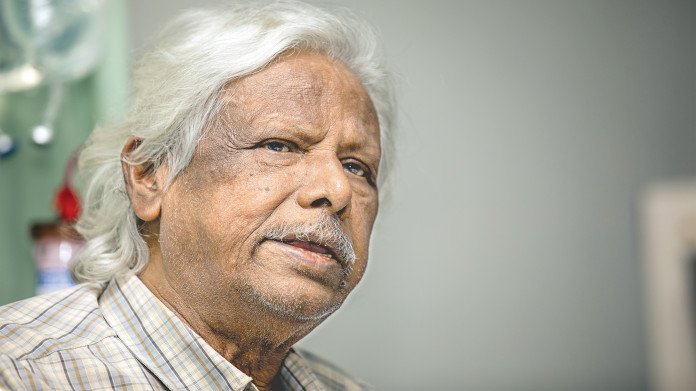
Dr. Zafrullah Chowdhury, founder of Gonoshasthaya Kendra and champion of affordable medicine, is honoured posthumously with the Independence Award 2026 for his lifelong contributions to public health in Bangladesh.