


Women-Only Bus Service in Dhaka: PM Reaffirms Plan to Improve Safety for Female Commuters

Women-Only Bus Service in Dhaka: PM Reaffirms Plan to Improve Safety for Female Commuters
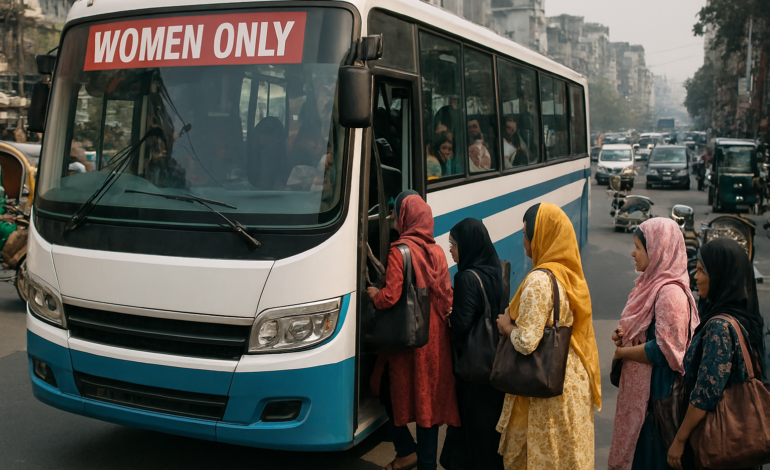
The government of Bangladesh has renewed its commitment to introducing a women-only bus service in Dhaka, a move aimed at improving safety and accessibility for female commuters in the capital. The initiative, reaffirmed by the prime minister Tarique Rahman is expected to become part of broader efforts to reform the country’s public transportation system and address long-standing concerns about harassment and mobility barriers faced by women in urban areas.
The proposed plan has generated significant public discussion, as Dhaka’s transport system struggles with congestion, overcrowding, and safety challenges. For many women, commuting to work, school, or other destinations remains a daily challenge, making the announcement of a dedicated bus service a notable development in the country’s governance and transport policies.
Government Reaffirms Women-Only Bus Initiative
The prime minister reiterated the government’s pledge to launch a dedicated bus service exclusively for women in Dhaka. According to official statements, the service is expected to be implemented within 180 days of assuming power, reflecting an election commitment to improve public transport safety and inclusivity.
The announcement came during discussions with transportation experts, including academics from the Bangladesh University of Engineering and Technology (BUET), who were consulted on strategies to make the initiative effective and sustainable.
Officials believe that such a service could address long-standing concerns related to safety and comfort for women commuters while also encouraging more women to participate in economic and educational activities that require daily travel.
Why Women-Only Bus Services Are Being Considered
Public transport in Dhaka has often been criticized for lacking adequate safety measures for women. Studies and surveys have highlighted how many female passengers face harassment or uncomfortable situations while commuting on crowded buses.
This issue has prompted policymakers and civil society groups to explore alternative solutions, including gender-specific transport services. The women-only bus concept is intended to provide a safer commuting environment where women can travel without fear of harassment or discrimination.
In fact, earlier initiatives in Bangladesh and other countries have demonstrated that dedicated transport services for women can help address safety concerns and improve access to public mobility.
Previous Women-Only Transport Initiatives in Bangladesh
The idea of a women-only bus service is not entirely new in Bangladesh. Over the years, both government and private sector initiatives have attempted to introduce similar services. For example, a private initiative called “Dolonchapa” was launched in Dhaka to offer safer transportation options for women commuters.
Additionally, Bangladesh Road Transport Corporation (BRTC) previously operated limited women-friendly bus services in select routes in Dhaka and Chittagong. However, these services remained limited due to operational challenges, lack of awareness, and financial constraints.
These past experiences provide valuable lessons for the government as it plans to launch a more comprehensive and sustainable system in the capital city.
Challenges in Dhaka’s Public Transport System
Dhaka’s transport infrastructure faces multiple challenges that make commuting difficult for millions of residents. Overcrowded buses, limited seating, irregular schedules, and inadequate infrastructure are common problems for passengers.
For women in particular, these issues are compounded by safety concerns. Reports indicate that harassment and uncomfortable situations in public transport remain widespread, which discourages many women from using buses regularly.
Urban planners and transport experts argue that addressing these problems requires both policy reforms and targeted initiatives such as gender-friendly transport services.
Global Examples of Women-Only Transport Services
Women-only transport systems have been introduced in several countries around the world, including Japan, Iran, and the United Arab Emirates. These initiatives were primarily introduced to reduce harassment and provide safer travel environments for women commuters.
Such global examples demonstrate that gender-specific transportation can play a role in improving mobility for women, especially in densely populated urban areas. However, experts also note that these initiatives should be part of broader reforms aimed at making the entire transport system safer and more inclusive.
Potential Benefits of the Women-Only Bus Service
The proposed women-only bus service in Dhaka could bring several benefits:
1. Improved Safety
A dedicated service could reduce incidents of harassment and provide a more comfortable environment for female passengers.
2. Greater Participation of Women in the Workforce
Safer transportation options may encourage more women to pursue employment opportunities and education in different parts of the city.
3. Increased Confidence in Public Transport
By addressing safety concerns, the initiative could help restore trust in Dhaka’s public transport system.
4. Inclusive Urban Mobility
The project reflects the government’s broader vision of making urban transport accessible and equitable for all citizens.
Criticism and Concerns About the Plan
While many have welcomed the initiative, some experts argue that women-only buses alone cannot solve the deeper problems in the transport system. Critics believe that the government should also focus on improving overall bus services, increasing regulation, and ensuring better enforcement of safety measures.
Another concern is whether the service will have sufficient coverage and frequency to meet the needs of female commuters across the entire city. Past initiatives struggled due to limited routes and lack of publicity.
Transport experts emphasize that the success of the plan will depend on careful implementation, adequate funding, and strong coordination between government agencies.
Role of Technology and Policy in Safer Transport
Modern technology can also play a role in improving public transportation safety. Innovations such as GPS tracking, emergency alert systems, and improved bus monitoring could help create safer commuting environments for passengers.
Urban planners have also recommended introducing better bus stops, improved lighting, and dedicated security measures to ensure women feel safe while traveling.
Combining these improvements with the proposed women-only bus service could create a more comprehensive solution to Dhaka’s transport challenges.
What the Initiative Means for Bangladesh
The reaffirmation of the women-only bus service reflects a broader effort by the government to address gender-related challenges in urban mobility. As Dhaka continues to grow rapidly, ensuring safe and accessible transportation will remain a key priority.
If implemented successfully, the initiative could set an example for other cities in Bangladesh and even inspire similar policies in neighboring countries.
At the same time, the project highlights the importance of integrating social considerations into infrastructure development. Public transportation is not only about moving people from one place to another—it also shapes opportunities, safety, and quality of life.
Looking Ahead
The government’s renewed commitment to launching a women-only bus service in Dhaka marks a significant step toward addressing safety concerns faced by female commuters. While the idea has been attempted before, the new plan aims to learn from past challenges and create a more effective system.
As policymakers move forward with the project, its success will depend on proper planning, adequate resources, and strong public awareness. If implemented effectively, the initiative could transform commuting experiences for thousands of women in Dhaka and contribute to a more inclusive urban transport system.
Ultimately, the women-only bus service represents more than just a transportation project, it symbolizes Bangladesh’s ongoing efforts to ensure safety, equality, and mobility for all citizens.