

Why the Bangladeshi Rubber Industry Is Failing to Grab the Global Market Despite Having Potential?
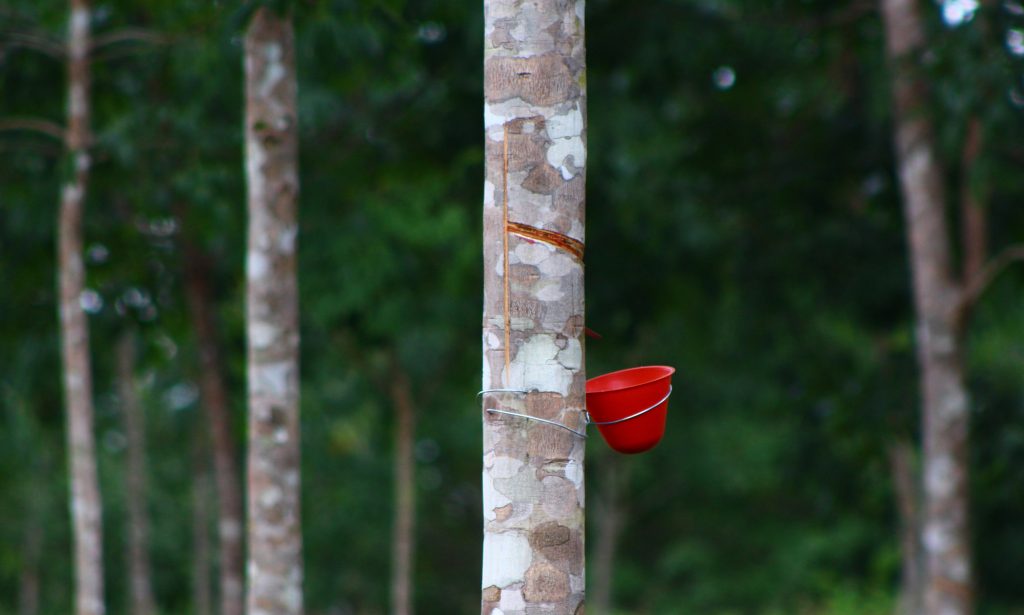

Bangladesh’s Rubber industry traces its roots back to experimental cultivation efforts by the British colonial regime in the mid-20th century, when seeds and budded saplings were brought from Malaysia and Sri Lanka to hills in Chattogram and Madhupur, Tangail, planting the earliest seeds for what would become a promising agro-industrial sector.
Commercial rubber production officially commenced in 1967-68 under the Bangladesh Forest Industries Development Corporation (BFIDC), and by the late 1970s total output had gradually climbed from a few hundred metric tons to thousands per year as plantations expanded in Chittagong Hill Tracts and other hilly regions suited to Hevea brasiliensis cultivation.
The sector’s formal development received a significant institutional boost in 2013 when the Bangladesh Rubber Board was established to oversee cultivation, research and industry promotion, and Bangladesh joined the Association of Natural Rubber Producing Countries to integrate with global producers.
Historical Growth, Production and Export Activities
Over decades, the Rubber industry in Bangladesh steadily expanded its acreage, with plantations now covering more than 147,000 acres nationwide and annual production estimated around 70,000 tonnes. Domestic output is managed by a mix of private operators and a smaller number of state-run gardens, though private plantations contribute the lion’s share of yield. Domestic factories utilise locally grown rubber for tyres, footwear, automotive components, gaskets and other industrial goods, but comparatively low yield per hectare and production inefficiencies have held back rapid growth. Historically, production climbed from merely hundreds of tonnes in the early years to more than 20,000 tonnes annually in recent decades, though it remains modest on the global stage.
Export figures reflect incremental growth with Bangladesh shipping natural rubber and related products to neighbouring markets including India, Sri Lanka, Pakistan and Malaysia. Exports have climbed in recent fiscal years, with rubber export earnings exceeding $7.5 million in FY2025 against lower sums in prior years, signalling rising global interest in Bangladeshi rubber.
Despite this positive trend, Bangladesh remains a relatively small exporter worldwide, with exports ranking well below global leaders. According to trade data, Bangladesh stood as the 46th largest exporter of raw rubber in 2023, underscoring both potential and relative underperformance.
Global Potential for Rubber and Growing Demand
The world Rubber industry continues to be fundamentally important, underpinned by core demand from automotive, tyre manufacturing, medical devices, industrial belts and footwear sectors. Natural rubber remains vital due to its unique elasticity, tensile strength, and resilience, attributes that synthetic alternatives cannot fully replicate. Global natural rubber production exceeds millions of tonnes annually and is forecast to expand as the global economy grows and industrial demand intensifies, especially in Asia and emerging markets.
Supply-demand fundamentals further underline potential for producers: global production of natural rubber was approximately 14.4 million tonnes in 2022 and is expected to grow over coming years, but demand is projected to rise more rapidly, creating a sustained market for suppliers capable of boosting output and quality.
Why Bangladesh Has Struggled to Compete Globally Despite Potential
Compared with global leaders in rubber cultivation and export such as Thailand, Indonesia and Vietnam, Bangladesh’s Rubber industry has faced structural challenges that prevent it from scaling and penetrating high-value markets. Thailand alone accounts for over a third of global natural rubber production, while Indonesia and Vietnam also command multi-million-tonne outputs and dominate export share, making it difficult for smaller producers to compete on volume and price.
One major challenge is productivity. Rubber yields in Bangladesh are significantly lower than international standards, with plantations generating much less per hectare compared to top producing countries, partly due to traditional cultivation practices, limited use of high-yield clones and inadequate tapping techniques.
Infrastructure gaps also constrain competitiveness. Bangladesh faces an acute shortage of rubber processing and value-addition facilities. Without sufficient domestic processing capacity, much of the raw latex is underutilised or exported in low-value forms, limiting the ability to capture higher margins from finished or semi-finished goods.
Local supply chain issues exacerbate these structural weaknesses. Domestic manufacturers frequently face supply disruptions from local rubber producers, pushing them to rely on imports from Indonesia and Thailand to maintain production continuity. Additionally, taxation structures on locally produced rubber sometimes disadvantage domestic suppliers compared to imported alternatives, further diminishing competitiveness.
Governance and investment bottlenecks have also slowed growth. State-owned plantations have historically yielded negligible output compared to private operations, and inconsistent policy support has hindered coordinated expansion and quality improvement efforts.
Competitive Comparison with Global Leaders
When measured against global benchmarks, Bangladesh’s standing in the Rubber industry remains modest. Leading producers such as Thailand and Indonesia produce millions of tonnes annually and benefit from sophisticated processing ecosystems, strong export networks, and consistent quality standards that meet industrial specifications worldwide.
These countries also benefit from focused research, improved clone varieties and entrenched supply chains that link plantation, processing and export functions seamlessly. By contrast, Bangladesh’s output volume remains in the tens of thousands of tonnes, well below its competitors, and its market share in global rubber exports is small.
Furthermore, global consumption centers such as China and India exert powerful demand forces that benefit larger producers able to serve them in volume and continuity, while Bangladesh currently lacks the scale to capture significant shares of this demand.
Way Forward for Bangladesh’s Rubber Industry to Realise Global Potential
To elevate its position in the global Rubber industry, Bangladesh must prioritise a multi-pronged strategy focused on boosting productivity, improving quality, and integrating further into global value chains. Key areas for action include investing in research and the dissemination of high-yield rubber clones to raise per-hectare yield and resilience against pests and climate stressors. Expanding processing infrastructure near plantation areas would reduce waste, enable value-addition and attract investment in downstream manufacturing.
Policy reform is also critical. Rationalising tax and tariff frameworks to level the playing field for local producers versus imports would strengthen domestic supply responsiveness. Enhancing coordination between government agencies, industry stakeholders and research institutions can foster a more strategic approach to sector development.
Finally, targeted marketing initiatives that highlight Bangladesh’s unique climatic advantages for rubber cultivation and emphasize quality compliance with international standards can open doors to niche export markets. Partnering with global buyers and securing certifications required by major tyre and industrial rubber manufacturers can improve Bangladesh’s credibility as a reliable supplier.
Balancing Promise with Strategic Action
Bangladesh’s Rubber industry has deep historical roots and undeniable potential supported by favourable agro-ecological conditions and a steadily growing production base. Yet stubborn structural and competitive challenges have held back meaningful global market capture. By focusing on productivity improvements, infrastructure development, regulatory reform and quality enhancement, Bangladesh can transition from a small player to a more formidable contender in the global rubber landscape, contributing to economic diversification and rural livelihood enhancement in the years ahead.