Spirited Bangladesh Exit From Quarter Final Race but Leaves a Mark in WC debut
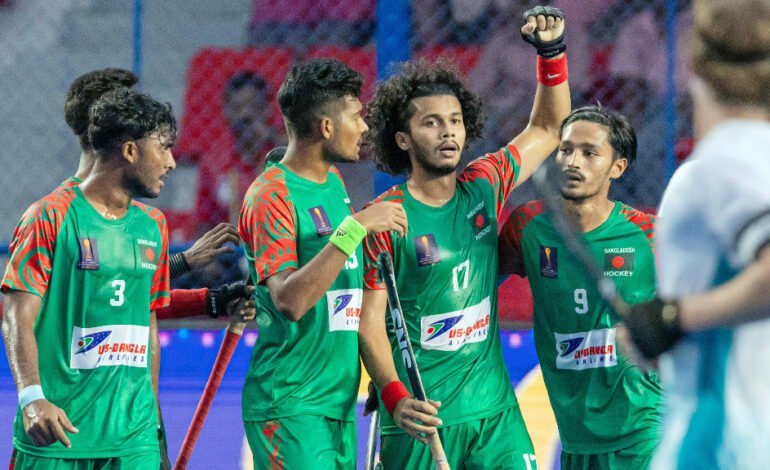

Bangladesh Push France to the Limit in a Thrilling 3–2 Hockey Battle
Bangladesh U-21 delivered one of their most spirited performances in the FIH Hockey Men’s Junior World Cup, narrowly losing 3–2 to world-ranked France in a high-intensity match that showcased discipline, structure, and a growing sense of belief within the team.
Despite the defeat, the performance signaled clear progress for the men in red and green as they continue to adapt to the pace and standards of elite European hockey.
A Match That Tested Bangladesh’s Resilience
Facing France is never easy. The European side is known for its pace, tactical sharpness, and ability to exploit small gaps in the opposition structure. Yet Bangladesh began the match with confidence and a clear plan. They defended collectively, counterattacked with purpose, and refused to let the French dictate the entire rhythm of the game.
Throughout the first half, Bangladesh absorbed pressure but also threatened with sharp passing sequences and well structured moves into the French circle. Their defensive lines remained compact, and the midfield worked tirelessly to slow down France’s transitions.
The European side, however, capitalized on their opportunities. Their precision in the circle and experience in high paced games helped them maintain slight control during key phases. Still, Bangladesh struck back with determination, scoring twice and keeping the match within reach until the final whistle.
Aikman Praises Discipline and Structure
After the match, head coach Gobie Aikman praised the team’s maturity and commitment to the strategy laid out before the game. His assessment reflected confidence in the players’ long term development.
“We played a very good match. We tried to be composed, calm, disciplined and structured. We tried to attack where possible and prevent them from attacking. We played positive hockey.”
Aikman made it clear that Bangladesh did not simply aim to defend. Instead, they attempted to create meaningful chances, press intelligently, and maintain a balanced approach.
“We did not only defend. We did not play madman’s hockey. We played good structured hockey for the future. We tried to accelerate where possible, play two versus one, create opportunities. We created opportunities. We also gave some opportunities away.”
His emphasis on structure, composure, and tactical awareness highlights how Bangladesh is slowly transforming from a reactive side to one capable of shaping matches proactively.
Experience Makes the Difference
Despite the narrow margin, Aikman acknowledged that France’s superior experience in high tempo fixtures made a noticeable impact. While Bangladesh fought with heart and intelligence, they lacked exposure to the kind of sustained pressure elite sides can apply.
“The more experienced team could handle it better than we did, because we have no experience in this kind of matches. It is very high pace, high level hockey and you do not play that in Bangladesh.”
The differences in exposure to top tier competition remain a major challenge. European teams regularly participate in world class leagues and tournaments, sharpening their skills week after week. Bangladesh, by contrast, rarely encounters opponents who push the tempo this intensely.
When asked directly if experience was the deciding factor between the two sides, Aikman agreed without hesitation.
“Yes, experience was the key difference.”
A Brief Campaign Review
This World Cup marked Bangladesh’s debut appearance at the junior global tournament. Their journey in Pool F began on a tough note with a 5-3 loss to Australia, even though drag-flick specialist Amirul Islam scored a brilliant hat-trick.
Recovering quickly, the team produced a spirited comeback to draw 3-3 against South Korea in their second match. Once again Amirul Islam proved his worth, netting another hat-trick under pressure.
Positive Signs for the Future
While the defeat may be disappointing on paper, the performance carries far greater significance. Bangladesh showed:
- Improved defensive structure
- Composed ball movement under pressure
- Clear attacking patterns in transitions
- Ability to create scoring opportunities against a top European side
Most importantly, the players demonstrated belief that they can challenge stronger opponents. The two goals scored were not lucky or accidental but came from well structured and confident play.
Aikman’s approach focuses on building a system that emphasizes discipline, intelligent positioning, and tactical patience. These are qualities seen in successful Asian hockey teams like India and Japan, and the progress is becoming visible with each match.
Amirul Islam: A Rising Star
Once again, drag-flick specialist Amirul Islam stood out. His goals under pressure, two consecutive hat-tricks earlier, and the late goal against France underline his importance. He remains Bangladesh’s brightest young talent in penalty-corner scenarios and could become a key asset for senior national teams in years to come.
Challenges That Must Be Addressed
Despite the progress, several areas still require attention:
1. Exposure to High Intensity Matches
Bangladesh’s players must face more teams like France, Germany, Spain, and the Netherlands to adjust to the speed and decision making required at the top level. Domestic hockey does not prepare them for the physicality and tempo demanded internationally.
2. Fitness and Conditioning
While Bangladesh’s structure was impressive, maintaining the pace for the entire match remains challenging. Improving endurance and match fitness will help reduce late game lapses.
3. Conversion in the Circle
Bangladesh created promising opportunities but failed to capitalize consistently. A higher scoring efficiency would bring them closer to teams in the top tier.
4. Reducing Defensive Errors
Against world class teams, even minor mistakes can become costly. Bangladesh must continue improving defensive discipline, especially in one versus one situations and penalty corner defenses.
Why This Match Matters for Bangladesh Hockey
This match is more than just a narrow loss. It represents:
- Proof of progress under structured coaching
- A sign that Bangladesh can compete with higher ranked nations
- Growing confidence within the squad
- A stronger foundation for future tournaments
The performance brings optimism ahead of upcoming international fixtures. With continued exposure, investment in youth development, and improvement in domestic hockey infrastructure, Bangladesh has the potential to rise significantly in world rankings.
Looking Ahead
Bangladesh’s next steps will determine how far this momentum can take them. The coaching staff hopes to secure more international friendlies and participation in competitive tournaments. Increasing the number of players competing abroad could also provide valuable experience.
As Aikman highlighted, the key now is consistency and continued belief in structured hockey.
Bangladesh’s 3–2 loss to France may not have delivered points, but it delivered something equally important: hope, direction, and a clear indication that the team is evolving into a more complete, competitive unit.