


Sharif Osman Hadi Dies: A Deep Look at His Life, Legacy and the Aftermath
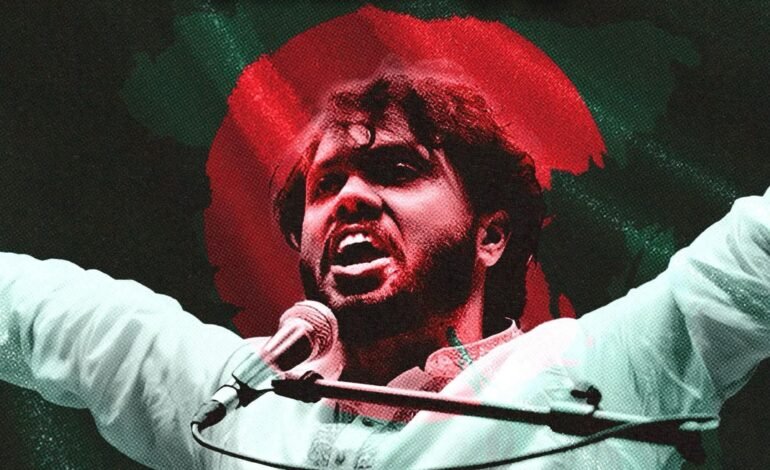

Sharif Osman Hadi Dies: A Deep Look at His Life, Legacy and the Aftermath
Sharif Osman Hadi, a prominent political activist and spokesperson for Inqilab Moncho, has died in Singapore while receiving medical treatment, his supporters confirmed on the night of 18 December 2025. Hadi’s passing comes days after he was critically injured in a brazen attack in Dhaka that shocked the nation, stirred political controversy and raised concerns about election-period violence and security.
Hadi’s death marks the end of a turbulent chapter that began on 12 December 2025, when he was shot in the head while travelling on a battery-powered rickshaw near the Paltan area of Dhaka. The incident occurred amidst a highly charged political climate, just days after the Election Commission announced the schedule for the upcoming national election.
A Rising Political Voice and Independent Candidate
Sharif Osman Hadi rose to national attention as the spokesperson for Inqilab Moncho, a grassroots political platform known for its outspoken stance on issues of sovereignty, governance and foreign influence. In addition to his leadership role in the platform, Hadi was also an aspiring independent candidate for the Dhaka-8 constituency. His political activism had made him a familiar figure across various segments of Bangladesh’s civil society.
In his campaign, Hadi advocated for systemic reform, political pluralism and resistance against what his supporters described as “hegemony and undue influence,” themes that resonated with certain segments of the electorate ahead of the national polls. His presence in the political arena energised grassroots movements and sparked debate across media and public forums.
The Shooting: A Critical Blow
The attack that ultimately led to Hadi’s death took place in broad daylight on 12 December 2025. Police and eyewitness reports indicate that two helmet-wearing gunmen on a motorcycle approached Hadi’s rickshaw and opened fire near Box Culvert Road in Dhaka’s Old Paltan area.
CCTV footage later recovered by law enforcement showed Hadi’s rickshaw being intercepted from the side before the assailants fled the scene. Responding teams, including the police, Rapid Action Battalion and the Detective Branch, cordoned off the area and began an investigation.
After the shooting, Hadi was rushed to Dhaka Medical College Hospital, where he underwent emergency treatment and brain surgery to remove the bullet. Due to the severity of his injuries, including a gunshot wound that entered and exited his skull, his condition remained critical. Officials later transferred him to Evercare Hospital for advanced care, but his life hung in the balance as doctors and specialists worked round-the-clock.
Medical Struggle and Transfer Abroad
Despite successful attempts to remove the bullet and stabilise his condition, Hadi suffered severe brain trauma. Medical teams reported that his prognosis was uncertain and that even after surgery, he remained in a critical state under intensive monitoring. At one point, a 13-member medical board was formed to oversee his treatment, addressing complications such as brain swelling and vital instability.
On 15 December, as his condition showed little improvement, Hadi was taken by air ambulance to Singapore General Hospital for further advanced care, a move that underscored the gravity of his injuries and the urgency of seeking specialised medical support abroad. Singapore’s Foreign Minister Dr Vivian Balakrishnan reportedly briefed Bangladesh’s Chief Adviser Professor Muhammad Yunus on Hadi’s condition, highlighting the diplomatic and humanitarian dimensions of the case.
Signs of Life and Public Anxiety
In the days following the shooting, news of Hadi’s critical condition spread across Bangladesh and beyond. Political parties, civil society groups and ordinary citizens monitored developments closely, with many appealing for calm while others demanded justice and accountability.
Political commentators noted that the attack appeared to be not only a physical assault but also a political statement, given its timing soon after the national election schedule was announced. Student leaders and political actors described the shooting as an alarming sign amid an already tense pre-election environment.
Law enforcement agencies made several arrests in connection with the case, including individuals suspected of aiding the prime accused in fleeing the country. The Rapid Action Battalion later detained parents and associates of key suspects, reflecting intense investigative activity around the violent attack.
Death and Political Responses
Late on 18 December 2025, Inqilab Moncho announced Hadi’s death in a Facebook post, framing him as a martyr in the struggle against hegemony. Party leaders and many supporters expressed deep sorrow, honouring his life and pledging to continue his political mission.
Major political parties, including the Bangladesh Nationalist Party (BNP) and Jamaat-e-Islami, publicly mourned Hadi’s demise and called for justice. They described him as a frontline figure in pro-democracy movements and various resistance campaigns, and urged accountability for those responsible for his death.
Leaders from smaller parties and religious organisations also issued condolences and called for thorough inquiries, underscoring the broad political impact of his death. Many emphasised the need to protect democratic processes and ensure that violence does not undermine electoral integrity.
The Broader Context: Elections and Security
The shooting and subsequent death of Sharif Osman Hadi have intensified scrutiny of Bangladesh’s pre-election atmosphere. While authorities have described the incident as isolated and not indicative of widespread law-and-order deterioration, many observers argue that high-profile violence raises concerns about political stability and public safety at a critical moment.
Hadi’s supporters have warned of continued unrest if justice is not swiftly delivered, planning rallies and sit-ins to demand accountability. Some have framed his death within larger narratives of resistance and political struggle that have defined Bangladesh’s recent sociopolitical discourse.
Legacy and Reflection
Sharif Osman Hadi’s life and untimely death reflect broader tensions in Bangladesh’s political landscape as it prepares for significant national elections. As a vocal activist, independent candidate and spokesperson for a grassroots platform, he represented an element of political diversity that many saw as vital to democratic engagement.
His death has sparked debate about political violence, the safety of public figures, and the role of dissenting voices in society. For supporters and critics alike, Hadi’s story is a reminder of the complex interplay between activism, public discourse and national security.
Conclusion
Sharif Osman Hadi’s passing after a violent attack marks a somber moment in Bangladesh’s political history. The events that led to his death from the shooting in Dhaka to his critical care in Singapore highlight challenges facing political actors and civil society during times of heightened tension. As the nation reflects on his legacy and the circumstances of his death, calls for justice, transparency and peaceful political participation will continue to shape public conversation in the weeks ahead.