





Remembering Ziaur Rahman on His Birth Anniversary: A Look at His Life and Legacy
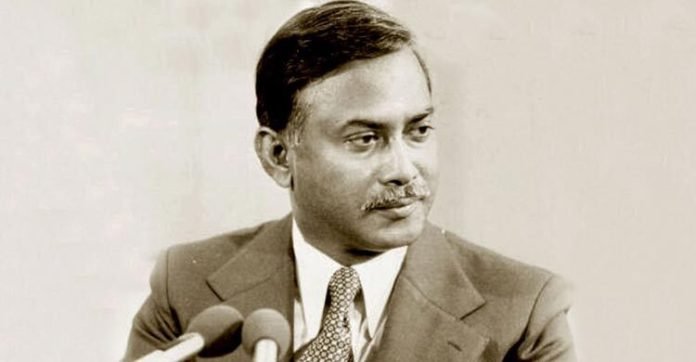

Remembering Ziaur Rahman on His Birth Anniversary: A Look at His Life and Legacy
On the birth anniversary of Ziaur Rahman, Bangladesh once again reflects on a leader whose role in the country’s history remains influential. More than four decades after his death, Ziaur Rahman continues to occupy a central place in discussions on Bangladesh’s liberation, state formation, political ideology, and governance. Remembering him today offers an opportunity to examine his life and legacy through a balanced historical lens.
Early Life and Military Career
Ziaur Rahman was born on 19 January 1936 in Bogura district during the final years of British colonial rule. He joined the Pakistan Army in the 1950s and later trained at the Pakistan Military Academy. His early career was shaped by discipline, command experience, and exposure to international military training, including a stint in the United Kingdom.
These formative years played a significant role in shaping his leadership style, which later combined military decisiveness with political pragmatism. By the late 1960s, he had established himself as a capable officer within the army, a background that would prove critical during the upheaval of 1971.
Role in the 1971 Liberation War
Ziaur Rahman’s place in Bangladesh’s national memory is firmly linked to the Liberation War of 1971. At a crucial moment following the crackdown by the Pakistani military, he broadcast a declaration of independence from Kalurghat Radio Station in Chattogram, announcing the formation of a sovereign Bangladesh.
During the war, he commanded a sector of the Mukti Bahini and later led the Z Force, one of the three brigade size formations of the Bangladesh Forces. His military leadership earned him recognition for bravery and organizational ability, contributing to the broader struggle that culminated in Bangladesh’s independence in December 1971.
Entry into Politics During a Turbulent Era
The years following independence were marked by political instability, economic hardship, and institutional fragility. Ziaur Rahman emerged as a key figure during this turbulent period, eventually assuming the presidency in 1977 after a series of coups and countercoups.
His rise to power reflected the broader uncertainty of the time, when the new nation was searching for political stability and direction. Unlike many civilian leaders of the era, Ziaur Rahman came from a military background, which influenced both his governance approach and public perception.
Governance and Political Reforms
As president, Ziaur Rahman introduced significant changes to Bangladesh’s political system. One of his most notable initiatives was the restoration of multi party politics, ending years of one party rule. This move reshaped the country’s political landscape and allowed greater political participation, though it also introduced new rivalries and polarization.
He emphasized what he termed Bangladeshi nationalism, an ideological framework that sought to define national identity beyond linguistic or ethnic lines, incorporating religious and cultural elements. Supporters viewed this as an effort to broaden inclusivity, while critics argued it shifted the ideological foundations of the state.
Economic Policies and Development Focus
Ziaur Rahman’s administration placed strong emphasis on economic recovery and growth. At a time when Bangladesh faced food shortages and widespread poverty, his government encouraged agricultural productivity, rural development, and private sector participation.
He promoted decentralization and local government structures, aiming to involve communities in development initiatives. Export oriented industries, remittance flows, and foreign investment began to gain traction during this period, laying foundations that future governments would build upon.
While economic challenges remained significant, these policies marked a shift from state dominated models toward a more mixed economic approach.
Foreign Policy and International Engagement
On the international stage, Ziaur Rahman pursued a pragmatic foreign policy. He worked to strengthen relations with South Asian neighbors, the Middle East, and Western nations, positioning Bangladesh as an independent actor in global affairs.
He was an advocate for regional cooperation and played a role in early initiatives that later evolved into the South Asian Association for Regional Cooperation. His foreign policy sought to balance national interests with economic diplomacy, labor migration, and development assistance.
Formation of the Bangladesh Nationalist Party
In 1978, Ziaur Rahman founded the Bangladesh Nationalist Party, creating a political platform that brought together diverse groups including professionals, rural leaders, and former freedom fighters. The party would go on to become one of the two dominant forces in Bangladeshi politics.
The BNP’s emergence institutionalized Ziaur Rahman’s political vision and ensured his influence extended beyond his presidency. Even decades later, the party continues to shape national debates and electoral politics.
Assassination and Aftermath
Ziaur Rahman was assassinated on 30 May 1981 in Chattogram during an attempted military uprising. His death marked another turning point in Bangladesh’s political history, leading to renewed instability and a prolonged period of military influence in governance.
The circumstances surrounding his assassination remain a subject of historical inquiry and public discussion. His death transformed him into a symbolic figure, with interpretations of his legacy often shaped by political affiliation.
Legacy and Contemporary Relevance
On his birth anniversary, Ziaur Rahman is remembered in different ways across Bangladesh. Supporters credit him with stabilizing a fragile nation, restoring political pluralism, and initiating economic reforms. Critics question aspects of his rise to power and governance style, emphasizing the military context of his presidency.
From a neutral historical perspective, his legacy is complex. He was a freedom fighter, a military leader, a political reformer, and a central figure in shaping post independence Bangladesh. His policies and decisions continue to influence debates on nationalism, democracy, and development.
Remembering Ziaur Rahman on his birth anniversary is not merely an act of commemoration, but an opportunity for reflection. His life encapsulates the struggles, contradictions, and aspirations of a young nation navigating independence.
As Bangladesh continues to evolve, understanding Ziaur Rahman’s role remains essential. History, after all, is best honored not through simplification, but through thoughtful examination of its complexities.


