


Independence Award 2026 Honourees: The Forgotten Liberation War Hero Major Abdul Jalil
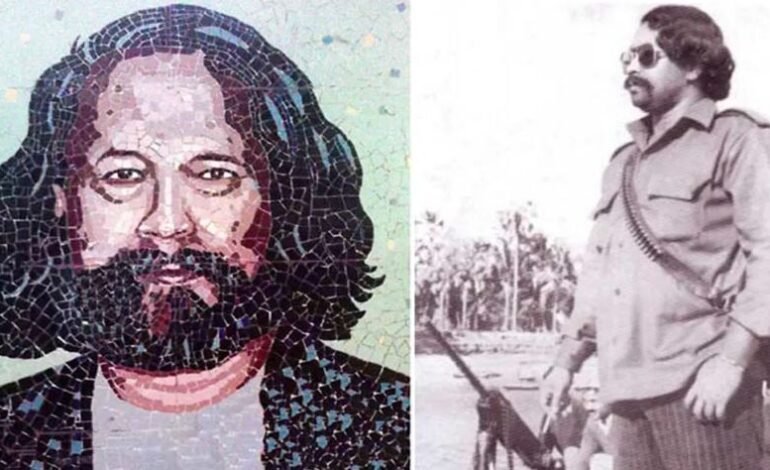

Independence Award 2026 Honourees: The Forgotten Battlefield Hero — Major Abdul Jalil’s Role in the Liberation War
Major Mohammad Abdul Jalil, a courageous freedom fighter and military leader whose role during the Bangladesh Liberation War shaped the resistance against Pakistani forces has been nominated for the Independence Award 2026.
Although his name is less widely known among younger generations, Major Jalil was one of the key commanders of the Mukti Bahini during the war. His leadership in Sector 9, one of the operational zones of the liberation struggle, played an important role in organizing guerrilla warfare and resistance operations in southern Bangladesh.
More than five decades after the war, the government has decided to honour him posthumously with the Independence Award 2026, Bangladesh’s highest civilian recognition.
Early Life and Military Career
Major Mohammad Abdul Jalil was born on 9 February 1942 in Wazirpur, Barisal, then part of British India. From an early age he demonstrated strong leadership qualities and an interest in national affairs.
After completing his early education, Jalil joined the Pakistan Army in 1962 as a cadet officer. During his military service, he also pursued higher education, earning a bachelor’s degree and a master’s degree in history.
He rose steadily through the ranks and was promoted to captain in 1965 and later to major in 1970. His military training and experience would soon become crucial when political tensions in East Pakistan escalated into armed conflict.
Role During the Bangladesh Liberation War
When the Liberation War began in March 1971, Major Jalil joined the struggle for Bangladesh’s independence. At the time, he was on leave in Barisal from his posting in Multan, and he quickly aligned himself with the resistance movement against the Pakistani military.
During the war, he was appointed the commander of Sector 9 of the Mukti Bahini. Sector 9 covered parts of the southwestern region of Bangladesh, including areas around Khulna, Barisal, and the Sundarbans, where guerrilla warfare and strategic operations were carried out against occupying forces.
As sector commander, Jalil coordinated operations involving freedom fighters, local resistance groups, and allied forces. The region’s difficult terrain rivers, mangrove forests, and remote villages made military operations extremely challenging.
Despite these obstacles, Jalil helped organize training camps and tactical operations aimed at weakening Pakistani control in the region. Under his leadership, Mukti Bahini fighters carried out guerrilla attacks, disrupted supply routes, and supported larger strategic offensives.
These actions contributed to the gradual erosion of Pakistani military authority in the region and strengthened the broader liberation movement across the country.
Leadership and Strategic Contributions
Major Jalil’s leadership during the war was characterized by discipline, strategic planning, and commitment to the independence cause. As a trained military officer, he played a key role in transforming scattered resistance groups into more organized fighting units.
Sector commanders like Jalil were responsible not only for military operations but also for coordinating intelligence, logistics, and training. They helped recruit and train thousands of young volunteers who joined the liberation struggle.
According to historical accounts, Jalil also helped establish training camps near the Indian border, where freedom fighters received preparation before being deployed for operations inside Bangladesh. These camps played a crucial role in strengthening the Mukti Bahini’s capacity to fight a prolonged guerrilla war.
His leadership contributed to the broader military campaign that ultimately led to the defeat of Pakistani forces and the birth of independent Bangladesh on 16 December 1971.
Life After Independence
After the war, Major Jalil entered the political arena and became involved in shaping the newly independent country’s political landscape.
He became one of the founding members of the political party Jatiyo Samajtantrik Dal (JSD) in 1972 and later served as its chairman.
The party advocated for what it described as “scientific socialism” and played an active role in political debates during the early years of Bangladesh’s independence.
Jalil also contested the 1973 parliamentary elections, though he was not elected. His political activities often placed him at the center of the country’s turbulent political environment in the 1970s.
Throughout his political career, Jalil remained outspoken about his views on governance, democracy, and national development. His activism also led to several arrests during periods of political unrest.
In later years he stepped down from party leadership and continued to engage in political and intellectual discussions about the future of Bangladesh.
Intellectual Contributions
Beyond politics and military leadership, Major Jalil also contributed to intellectual debates through his writings. He authored several books and essays discussing political philosophy, national identity, and the challenges facing post-independence Bangladesh.
Some of his notable works include:
- Seemahin Samay (1976)
- Surjodoy (1982)
- Arakshita Swadhinatayi Paradhinata (1989)
Through these writings, Jalil explored issues related to democracy, political reform, and the ideals that inspired the liberation struggle.
Death and Legacy
Major Mohammad Abdul Jalil passed away on 19 November 1989 in Islamabad, Pakistan. His body was later brought to Bangladesh and buried with honour at the Mirpur Martyred Intellectuals’ Graveyard in Dhaka.
Although his name gradually faded from mainstream public discussion, historians and freedom fighters continued to acknowledge his contributions to the Liberation War.
A bridge in Barisal has also been named in his memory, reflecting his lasting connection to the region where he was born and where he began his journey as a freedom fighter.
Recognition Through the Independence Award 2026
More than three decades after his death, Major Abdul Jalil is being recognized with the Independence Award 2026, the highest civilian honour in Bangladesh.
The award acknowledges his contributions as a sector commander of the Mukti Bahini during the Liberation War and his role in organizing resistance forces against Pakistani military rule.
For many historians and freedom fighters, the recognition serves as a reminder that the liberation struggle was shaped by countless individuals whose sacrifices and leadership helped achieve independence.
Remembering a Forgotten Hero
The story of Major Abdul Jalil reflects the broader history of Bangladesh’s liberation struggle one marked by courage, sacrifice, and determination.
While some heroes of the war are widely celebrated, others remain less visible in the national narrative. The Independence Award recognition brings renewed attention to Jalil’s contributions and ensures that his role in the nation’s history is remembered.
For younger generations, his life offers an important lesson about leadership, patriotism, and dedication to national ideals.
As Bangladesh honours the recipients of the Independence Award 2026, Major Abdul Jalil’s name stands as a reminder of the countless freedom fighters who helped shape the country’s independence.