


Khaleda Zia to Receive Independence Award 2026: A Posthumous Recognition of Political Legacy
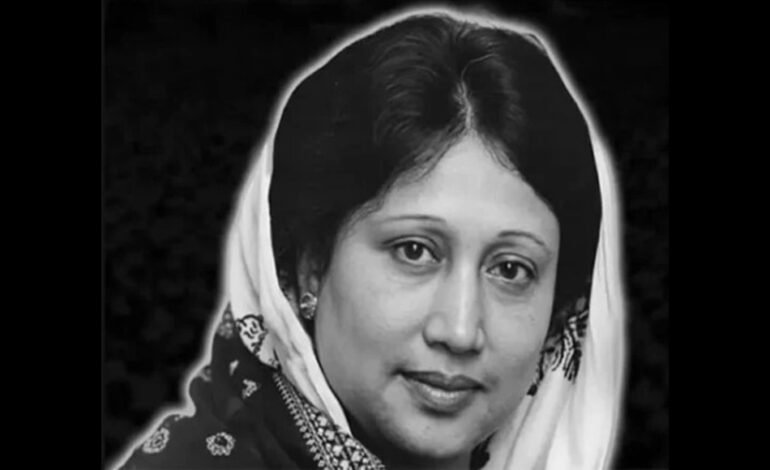
Bangladesh has announced that former prime minister Begum Khaleda Zia will be honored with the country’s highest civilian award, the Independence Award (Swadhinata Puraskar) 2026, in recognition of her contributions to national development, democracy, and education. The award will be given posthumously, highlighting her long political career and influence on Bangladesh’s political landscape.
The decision was announced by the Cabinet Division through an official press release, which also revealed that a total of 15 distinguished individuals and five institutions will receive the prestigious award this year.
The Independence Award is considered the highest state honor in Bangladesh and is typically presented every year on March 26, the country’s Independence Day, to individuals and organizations that have made exceptional contributions to the nation.
Among the other recipients of this year’s awards are Maj Abdul Jalil, Dr Zafrullah Chowdhury, and Dr Ashraf Siddiqui, Hanif Sanket (AKM Hanif) and Bashir Ahmed,Jobera Rahman (Linu),Mohammad Abdul Baki, Professor Dr MA Rahim and Professor Dr Sukomal Barua and Kazi Fazlur Rahman.
The announcement has generated widespread discussion across political and social circles, reflecting the enduring impact of Khaleda Zia’s political legacy and the continuing significance of the Independence Award in recognizing national service.
Understanding the Independence Award
The Independence Award (Swadhinata Puraskar) was introduced in 1977 and remains the most prestigious civilian recognition granted by the Government of Bangladesh.
The award commemorates the sacrifices made during the 1971 Liberation War and honors individuals who have made outstanding contributions in fields such as politics, education, science, culture, social service, and national development.
Recipients typically include:
- Political leaders
- Cultural icons
- Scientists and academics
- Social reformers
- Institutions that have contributed to national progress
Each year the government selects recipients whose work has had a significant impact on the country’s development or global reputation.
Khaleda Zia’s Political Legacy
Begum Khaleda Zia remains one of the most influential political leaders in Bangladesh’s history. She served as prime minister three times, first from 1991 to 1996 and later from 2001 to 2006.
Her political journey began during a turbulent period in Bangladesh’s history following the assassination of her husband, President Ziaur Rahman, in 1981. Ziaur Rahman was the founder of the Bangladesh Nationalist Party (BNP) and a central figure in the country’s political development after independence.
After her husband’s death, Khaleda Zia gradually rose to leadership within the BNP and eventually became one of the most powerful political figures in the country.
Her leadership helped shape Bangladesh’s democratic transition during the early 1990s, when the country moved away from military rule toward parliamentary democracy.
Role in Restoring Parliamentary Democracy
One of Khaleda Zia’s most notable political achievements was her role in restoring parliamentary democracy in Bangladesh in 1991.
Following years of political unrest and mass movements against military rule, Bangladesh held national elections that brought Khaleda Zia to power as prime minister. Her government oversaw constitutional reforms that shifted the country from a presidential system to a parliamentary form of governance.
This political transition is widely regarded as a key milestone in Bangladesh’s democratic development.
Under her leadership, the government introduced policies aimed at strengthening democratic institutions, expanding political participation, and encouraging economic reforms.
Contributions to Education and Social Development
The Cabinet Division cited Khaleda Zia’s contributions to nation-building, democracy, and women’s education as key reasons for selecting her for the Independence Award.
During her time in government, various initiatives were launched to improve access to education, particularly for girls.
Bangladesh saw significant progress in female education during the 1990s and early 2000s, including:
- Expansion of female education stipend programs
- Increased enrollment of girls in secondary schools
- Improved education infrastructure in rural areas
These initiatives helped increase female literacy rates and strengthen gender participation in education.
Women’s empowerment became an important policy focus during her administrations, contributing to long-term social change.
Political Rivalry and Bangladesh’s Two-Party System
Khaleda Zia’s political career also defined one of the most notable rivalries in South Asian politics.
For decades, Bangladesh’s political landscape was dominated by two major parties:
- The Bangladesh Nationalist Party (BNP) led by Khaleda Zia
- The Awami League led by Sheikh Hasina
This rivalry shaped national politics for more than three decades, influencing election campaigns, policy debates, and governance.
While the competition between the two leaders often produced intense political tensions, it also contributed to the evolution of Bangladesh’s multi-party democratic system.
Significance of the Posthumous Recognition
Awarding the Independence Award to Khaleda Zia posthumously carries symbolic importance for Bangladesh.
The decision acknowledges her role as a major political figure who shaped national politics and democratic institutions during a critical period in the country’s history.
It also reflects the government’s recognition of individuals whose contributions extend beyond partisan politics.
Posthumous awards are occasionally granted to leaders, intellectuals, and public figures whose work continues to influence the nation even after their passing.
For many observers, the recognition highlights the historical significance of Khaleda Zia’s leadership during Bangladesh’s democratic transition.
The Broader Context of the 2026 Independence Awards
Along with Khaleda Zia, the government has selected 15 individuals and five institutions for the Independence Award this year.
These recipients represent diverse fields including politics, culture, social service, and national development.
The awards will be formally presented on March 26, when Bangladesh celebrates Independence Day to commemorate the declaration of independence in 1971.
Independence Day is one of the most important national observances in Bangladesh, marked by ceremonies, tributes to freedom fighters, and recognition of individuals who have served the country.
Public Reaction and Historical Reflection
The announcement has sparked discussions among political analysts, historians, and citizens about Khaleda Zia’s legacy.
Supporters view the award as a recognition of her contributions to democratic governance and national politics.
Others see it as an opportunity to reflect on Bangladesh’s political history and the leaders who played crucial roles in shaping the country’s democratic journey.
Regardless of political perspectives, there is little doubt that Khaleda Zia remains one of the most influential figures in Bangladesh’s modern political history.
Looking Ahead
The decision to confer the Independence Award 2026 on former prime minister Begum Khaleda Zia highlights the enduring significance of her political legacy.
From her role in restoring parliamentary democracy to her influence on education and social policy, Khaleda Zia’s leadership left a lasting mark on Bangladesh’s political development.
As Bangladesh prepares to celebrate its Independence Day, the recognition of national figures like Khaleda Zia serves as a reminder of the individuals whose contributions have shaped the country’s journey.
The Independence Award continues to honor those who have dedicated their lives to the progress, stability, and development of Bangladesh ensuring that their legacy remains part of the nation’s collective memory.