




How Will the Proposed Monorail Service Redefine Bangladesh’s Commercial Capital Chattogram’s Economic Landscape?

Chattogram, Bangladesh’s commercial capital and principal maritime gateway, has long been the engine of the national economy. Handling more than 90 percent of the country’s seaborne trade, hosting export-oriented industries from garments to shipbuilding, and acting as the logistical heart for the Bay of Bengal region, the city’s economic importance is unmatched outside Dhaka. Yet Chattogram’s growth has been persistently constrained by one critical weakness, an overburdened and inefficient urban transport system.
Decades of unplanned urbanisation, rising vehicle ownership, narrow arterial roads, and mixed traffic have turned daily commuting into a costly ordeal. According to various transport studies, average vehicle speed in key corridors has dropped to below 10 kilometres per hour during peak times, raising logistics costs, increasing fuel consumption, and eroding productivity. For a city whose competitiveness depends on the smooth movement of goods and people, congestion has become more than an inconvenience, it has become an economic risk.
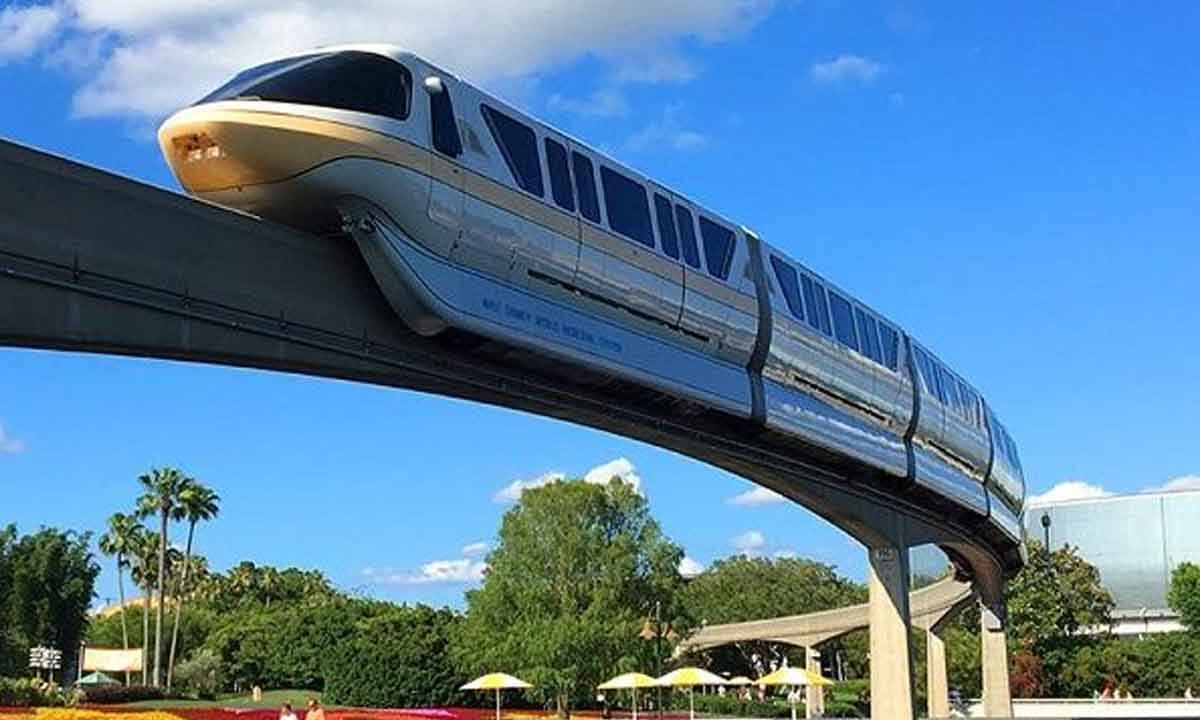
Against this backdrop, the proposed monorail service has emerged as a bold attempt to reimagine Chattogram’s urban mobility and economic future. Initiated by the Chattogram City Corporation under a Public Private Partnership framework, the project seeks to introduce the country’s first monorail service as a backbone of a modern, multimodal transport network. More than a transport intervention, it is being framed as a catalyst for economic transformation, environmental sustainability, and urban renewal.
Current Conditions: Reality of congestion and inefficiency
The present transport condition in Chattogram reflects the pressures of rapid growth without adequate planning. The city’s population has crossed nearly seven million in the metropolitan area, while daily commuter flows have expanded far faster than road capacity. Trucks serving the port, buses, private cars, motorcycles, rickshaws, and informal transport all compete for the same limited road space.
This congestion directly affects the economy. Delays in moving containers from the port to industrial zones increase turnaround time and logistics costs, reducing competitiveness for exporters. Workers lose productive hours in traffic, raising effective labour costs for businesses. Air pollution from idling vehicles worsens public health, adding indirect economic burdens through healthcare expenditure and lost workdays.
Existing public transport options remain fragmented. Bus services are largely unregulated, rail-based urban commuting is minimal, and water transport within the city is underutilised despite Chattogram’s canals and rivers. Attempts to introduce Bus Rapid Transit and improve traffic management have faced land constraints and coordination challenges. In this context, the monorail service is being positioned as a high-capacity, space-efficient alternative that can bypass road congestion altogether.
Project Outline: A leap towards structured mobility
The proposed monorail service is ambitious in both scale and design. According to plans shared by the Chattogram City Corporation, the network will stretch approximately 71.40 kilometres, supported by around 70 stations across the city and surrounding growth areas. Trains are expected to run at five-minute intervals, offering reliability that conventional road transport cannot match.
Four major corridors have been identified. One route will connect Kalurghat to the Airport over 26 kilometres with 20 stations, linking industrial belts and residential zones to air and port-related infrastructure. Another route from City Gate to Notun Bridge will span 13.5 kilometres with 12 stations, serving key entry points to the city. A longer corridor from Chattogram University in Hathazari to Firingee Bazar will cover 20.5 kilometres with 21 stations, directly connecting educational hubs with commercial centres. A fourth route from Alankar to Nimtala via the Agrabad Access Road will run 10.9 kilometres with 17 stations, cutting through the city’s core business district.
Implemented under a Build Operate Transfer model, the project’s estimated cost stands at around Tk30,000 crore. A foreign joint venture, the German-Egyptian consortium Arab Contractors and Orascom Peninsula Consortium, has signed a memorandum of understanding to conduct the feasibility study, with Tk150 crore allocated for this phase. Once approvals are secured from relevant ministries, the feasibility study is expected to take ten months, followed by four to five years of construction.
Economic Impact: A catalyst for productivity and trade
The most immediate economic impact of the monorail service would be a significant reduction in travel time. Project officials estimate commuting time could fall by more than 40 percent along key corridors. For businesses, this translates into punctual labour, extended effective working hours, and more predictable logistics.
Chattogram’s role as a port city means that time savings have multiplier effects. Faster movement of port workers, customs officials, freight forwarders, and service providers improves overall port efficiency. Reduced congestion on access roads allows freight vehicles to move more smoothly, even though the monorail service itself is passenger-focused. Over time, lower logistics friction enhances the city’s attractiveness as a base for export-oriented manufacturing and regional distribution.
Commercial real estate is also likely to benefit. Experience from cities such as Kuala Lumpur and Bangkok shows that fixed rail systems encourage transit-oriented development. Areas around monorail service stations often see increased demand for offices, retail spaces, hotels, and housing. In Chattogram, corridors such as Agrabad, Firingee Bazar, and City Gate could witness renewed investment, reshaping the urban economic geography.
Social Inclusion: A shift for workforce mobility
A critical promise of the monorail service lies in its potential to improve mobility for lower and middle-income groups. Affordable, reliable mass transit reduces dependence on informal and often unsafe transport modes. For workers living in peripheral areas, access to fast rail links expands employment opportunities across the city.
The planned integration of the monorail service with Bus Rapid Transit, conventional rail, and water transport through smart ticketing and mobility as a service platforms could create a seamless travel experience. Such integration reduces transfer penalties and encourages public transport use, easing pressure on roads.
From a labour market perspective, better connectivity between residential zones, industrial areas, universities, and commercial hubs enhances human capital utilisation. Students can access education more easily, employers can draw from a wider talent pool, and informal barriers created by distance and congestion are reduced.
Environmental Gains: An answer to urban pollution
Chattogram’s air quality has deteriorated steadily due to traffic emissions, industrial activity, and construction. Transport-related pollution is a major contributor, particularly from diesel buses and older vehicles. By shifting a substantial share of daily trips to electric-powered rail, the monorail service could cut carbon emissions by an estimated 40 percent along its corridors.
The project’s requirement of 30 to 35 megawatts of power raises questions about energy sourcing, yet even with the current grid mix, electric rail remains more energy-efficient per passenger kilometre than road-based transport. Over time, as Bangladesh expands renewable energy capacity, the environmental benefits of the monorail service could increase further.
Reduced air and noise pollution also carry economic benefits. Healthier urban environments lower public health costs and improve quality of life, factors increasingly important in attracting skilled professionals and foreign investment.
Investment Model: An outlook with financial risks
While the Public Private Partnership approach reduces immediate fiscal pressure on the government, it also introduces financial complexities. The estimated Tk30,000 crore cost makes the monorail service one of the most expensive urban infrastructure projects in the country. Ensuring commercial viability without imposing high fares will be a delicate balance.
Under the memorandum of understanding, the implementing company will pay around Tk5 per passenger to the Chattogram City Corporation during the concession period of 20 to 25 years. Passenger demand forecasts must therefore be realistic, accounting for income levels, fare sensitivity, and competition from other modes.
Currency risk, construction delays, and cost overruns are additional concerns, particularly given Bangladesh’s experience with large infrastructure projects. Transparent governance, robust contracts, and effective regulatory oversight will be essential to protect public interest while maintaining investor confidence.
Implementation Challenges: A test of governance capacity
Despite its promise, the monorail service faces significant challenges. Land acquisition for depots and maintenance facilities, estimated at around 50 acres, could encounter resistance and legal delays. Inter-agency coordination among city authorities, transport ministries, power utilities, and investment bodies has historically been a weak point in urban projects.
Technical integration with existing and planned transport systems requires careful planning. Without proper last-mile connectivity, stations risk becoming underutilised. Construction in dense urban areas may disrupt traffic and business activity in the short term, potentially generating public opposition if not managed sensitively.
Affordability remains another concern. If fares are set too high to ensure financial returns, the monorail service may fail to attract the mass ridership needed to ease congestion and deliver social benefits.
Alternatives and complements: A balanced transport strategy
The monorail service should not be viewed as a standalone solution. Alternatives such as Bus Rapid Transit, improved commuter rail, and water-based transport offer lower-cost options that can serve different corridors and demand profiles. For example, dedicated bus lanes may be more suitable in areas with lower passenger density, while revitalised canals could support water taxis in specific zones.
An integrated transport strategy that combines the monorail service with these alternatives will yield the greatest economic return. Traffic management reforms, parking controls, and pedestrian-friendly planning are also essential to maximise the benefits of high-capacity rail.
Future Prospects: A redefinition of urban competitiveness
If implemented effectively, the monorail service could redefine Chattogram’s economic landscape over the next two decades. Faster, cleaner, and more reliable mobility strengthens the city’s role as a national and regional commercial hub. Improved connectivity supports port efficiency, industrial growth, tourism, and real estate development.
Perhaps most importantly, the project signals a shift in urban thinking. By prioritising mass transit and long-term sustainability, Chattogram positions itself alongside emerging Asian cities that recognise mobility as a foundation of economic competitiveness. The monorail service, as the country’s first of its kind, could also set a precedent for other Bangladeshi cities grappling with congestion and growth.
The journey from proposal to reality will be complex and politically demanding. Yet if governance challenges are addressed and integration is prioritised, the monorail service has the potential not only to move people faster, but to move Chattogram towards a more productive, inclusive, and resilient economic future.