



How will people benefit from the government’s priority canal excavation initiative?
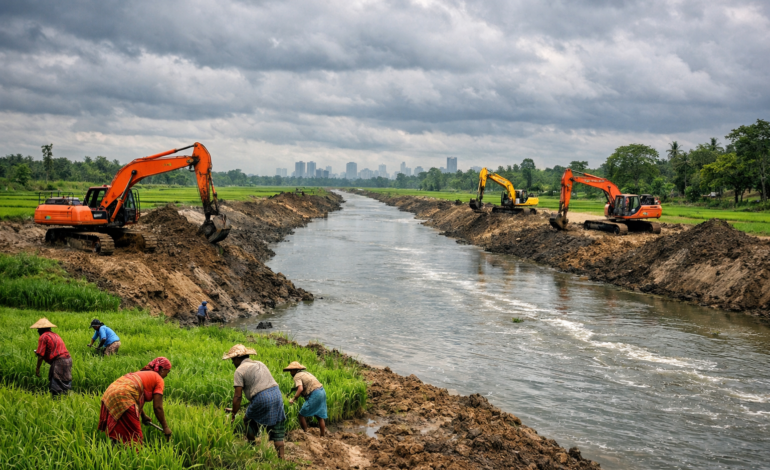

Bangladesh, a riverine country crisscrossed by more than 700 rivers and thousands of canals, has historically relied on its intricate water network for agriculture, transportation, drainage, and livelihoods. Over the decades, however, unplanned urbanisation, encroachment, sedimentation, and weak maintenance led to the gradual disappearance and degradation of canals across the country. As climate change intensifies rainfall patterns and waterlogging worsens in both rural and urban areas, canal excavation has emerged as a critical national priority.
The government’s renewed focus on canal excavation reflects a recognition that restoring waterways is not merely an environmental intervention but also an economic and social necessity. Experts believe that large-scale canal excavation could significantly improve agricultural productivity, reduce urban flooding, enhance water management, and strengthen climate resilience in a low-lying deltaic country that faces growing hydrological risks.
This policy shift comes at a time when Bangladesh is grappling with rising urban congestion, declining water bodies, and increasing demand for irrigation. With canals once forming the backbone of drainage and irrigation systems, their restoration through canal excavation is now seen as a key strategy to address both long-standing and emerging challenges.
A Troubling Legacy: The Gradual Loss of Canals Across the Country
Historically, canals played a central role in Bangladesh’s hydrological system. In cities like Dhaka, for instance, records show that approximately 340 kilometres of canals once crisscrossed the capital. Over time, nearly 120 kilometres disappeared due to illegal construction and encroachment, while the remaining waterways fell into disrepair.
This trend was not limited to urban areas. Rural canals, which once ensured irrigation and drainage, also suffered from sedimentation and lack of maintenance. As canals filled with silt and waste, their ability to carry water diminished. Consequently, waterlogging increased, agricultural productivity declined, and communities became more vulnerable to floods.
In Chattogram alone, researchers have noted that the city once had more than 70 major canals, many of which were gradually filled or blocked. The loss of these canals significantly contributed to chronic waterlogging and drainage problems.
The environmental consequences of canal degradation have been profound. Reduced drainage capacity has exacerbated urban flooding during monsoon seasons. At the same time, the loss of irrigation channels has limited farmers’ ability to cultivate crops during dry periods.
Experts say this decline highlights the urgent need for systematic canal excavation to restore water flow, revive ecosystems, and support sustainable development.
A Strong Policy Push
Recognising the urgency, the just assumed government has prioritised canal excavation. Large-scale projects are being planned across multiple regions, targeting both urban drainage and agricultural irrigation. These initiatives illustrate the growing recognition that canal excavation is essential for addressing both urban infrastructure challenges and rural agricultural needs.
How Canal Excavation Boosts Food Security?
Agriculture remains the backbone of Bangladesh’s economy, employing a large portion of the population and contributing significantly to national GDP. Canal excavation has already demonstrated substantial benefits for agricultural productivity.
When canals are restored, they improve both irrigation and drainage systems. This allows farmers to cultivate land that was previously waterlogged or drought-prone. In Rangpur, the re-excavation of two canals freed nearly 9,700 hectares of land from waterlogging, enabling farmers to produce over 70,000 tonnes of additional paddy annually.
Similarly, projects in Khulna have provided irrigation to hundreds of hectares of farmland, helping farmers achieve higher yields and diversify crop production. By facilitating year-round cultivation and reducing dependence on erratic rainfall, canal excavation strengthens food security and stabilises rural incomes. Experts believe that nationwide expansion of such projects could significantly boost agricultural output and reduce vulnerability to climate shocks.
Urban Resilience: Reducing Waterlogging and Flood Risks
Urban flooding is a recurring challenge in Bangladesh, particularly in major cities such as Dhaka and Chattogram. Blocked canals have reduced drainage capacity, leading to severe waterlogging during heavy rains.
Restoration efforts are already producing positive results. In Dhaka, excavated canals have improved water flow, helping authorities address chronic flooding problems. In Chattogram, dredging of canals connected to the Karnaphuli River has improved drainage conditions and eased public suffering during monsoon seasons. As climate change increases rainfall intensity and sea-level rise threatens coastal regions, canal excavation will play an increasingly important role in urban climate adaptation strategies.
Economic Benefits: Canal Excavation as a Driver of Growth
Beyond agriculture and flood control, canal excavation offers broader economic benefits. Improved water management supports fisheries, inland navigation, and rural livelihoods.
Restored canals can facilitate transportation in rural areas, reducing logistics costs for farmers and traders. In addition, canal excavation creates employment opportunities in construction, dredging, and maintenance.
Experts argue that large-scale canal restoration could also enhance Bangladesh’s resilience to climate-related economic losses. By preventing waterlogging and crop damage, canal excavation reduces financial risks for both farmers and local governments.
Environmental Gains: Restoring Ecosystems and Biodiversity
Canal excavation also contributes to environmental restoration. Revived waterways improve water circulation, reduce pollution, and support aquatic ecosystems. Restored canals help replenish wetlands, which play a vital role in maintaining biodiversity and regulating water cycles. They also enhance groundwater recharge and reduce soil degradation. Environmentalists emphasise that canal excavation is not only a technical solution but also a critical component of sustainable water management.
Climate Adaptation: A Strategic Tool for Future Challenges
Bangladesh is one of the most climate-vulnerable countries in the world. Rising sea levels, erratic rainfall, and increasing floods threaten both urban and rural areas. Canal excavation helps manage excess rainwater, prevent flooding, and store water for irrigation during dry seasons. By improving drainage and water retention capacity, restored canals act as natural climate buffers. Experts say canal excavation will become increasingly important as Bangladesh adapts to climate change and seeks to safeguard its food and water security.
Persistent Challenges: Obstacles to Effective Canal Excavation
Despite its benefits, canal excavation faces several challenges. Encroachment remains a major problem, particularly in urban areas where illegal construction often blocks waterways. Poor waste management also undermines excavation efforts. Authorities note that dumping of waste into canals can quickly reverse the gains of restoration projects. Another challenge is inadequate maintenance. Experts warn that excavation alone is not enough, continuous monitoring and upkeep are necessary to ensure long-term effectiveness. Funding constraints and coordination issues among government agencies further complicate implementation.
Future Prospects: Canal Excavation as a Pillar of Sustainable Development
Looking ahead, canal excavation is expected to play a central role in Bangladesh’s development strategy. Policymakers increasingly view water management as a key factor in economic growth, climate resilience, and environmental sustainability.
Expanding canal excavation programmes nationwide could bring millions of hectares of land under productive use, reduce urban flooding, and strengthen rural livelihoods. Experts believe that integrating canal restoration with urban planning, agricultural policy, and climate adaptation strategies will maximise its long-term benefits.
Why Canal Excavation Is Essential for Bangladesh’s Future?
Bangladesh’s renewed emphasis on canal excavation reflects a broader shift towards sustainable water management. By restoring its historic waterways, the country is addressing long-standing challenges while preparing for future climate risks.
From boosting agricultural productivity to reducing urban flooding and strengthening environmental resilience, canal excavation offers wide-ranging benefits. However, achieving these gains will require strong governance, consistent maintenance, and community participation.
As Bangladesh continues its development journey, canal excavation is likely to remain a cornerstone of efforts to ensure food security, economic stability, and environmental sustainability in the decades ahead.