


Five Mosques in Bangladesh You Must Visit

Five Mosques in Bangladesh You Must Visit
Bangladesh is home to thousands of mosques that reflect the country’s rich Islamic heritage, architectural diversity, and spiritual traditions. From centuries-old Sultanate structures to modern architectural masterpieces, these mosques stand as symbols of faith, culture, and history.
Many of them are not only places of worship but also important landmarks that attract visitors, historians, and architecture enthusiasts from around the world. Whether you are exploring historic cities or traveling through rural landscapes, visiting these mosques offers a glimpse into the country’s Islamic heritage and artistic traditions.
Here are five remarkable mosques in Bangladesh you must visit.
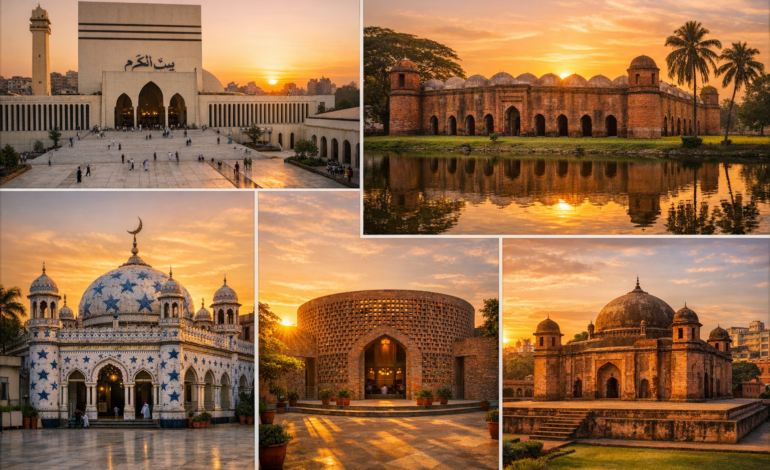
1. Baitul Mukarram National Mosque – The Heart of Dhaka
The Baitul Mukarram National Mosque is the national mosque of Bangladesh and one of the most recognizable religious landmarks in the country. Located in the bustling Paltan area of Dhaka, it serves as the central mosque for many major religious events and Friday prayers.
Construction of the mosque began in the early 1960s, and its design was inspired by the Kaaba in Mecca, which is reflected in its cube-shaped structure. Unlike many traditional mosques, Baitul Mukarram has a relatively minimalist exterior but a spacious interior capable of accommodating tens of thousands of worshippers during major religious occasions.
The mosque is surrounded by a large commercial complex and busy markets, making it one of the most vibrant religious sites in Bangladesh. Every day, thousands of people visit the mosque not only for prayers but also to experience the spiritual atmosphere of the country’s most important Islamic center.
For travelers exploring Dhaka, Baitul Mukarram offers a powerful introduction to the city’s religious life and cultural identity.
2. Sixty Dome Mosque – A UNESCO World Heritage Treasure
The Sixty Dome Mosque, locally known as Shat Gombuj Masjid is one of the most important historical mosques in South Asia.
Located in Bagerhat in southwestern Bangladesh, the mosque was built during the Bengal Sultanate period by the famous Islamic preacher and governor Khan Jahan Ali. Construction began around 1442 and was completed in 1459.
Despite its name, the mosque actually contains 81 domes supported by 60 stone pillars, which is believed to be the origin of its popular name.
The structure is part of the Historic Mosque City of Bagerhat, a UNESCO World Heritage Site that includes several historic mosques and monuments from the Sultanate era.
With its thick brick walls, massive columns, and rows of domes, the mosque represents a unique blend of Indo-Islamic and Bengal Sultanate architecture. It remains an active place of worship while also attracting tourists, historians, and architecture lovers.
3. Baitur Rauf Mosque – A Modern Architectural Masterpiece
The Baitur Rauf Mosque stands out as one of the most innovative modern mosques in Bangladesh.
Designed by renowned Bangladeshi architect Marina Tabassum, the mosque was completed in 2012 in the Faidabad area of Dhaka. Unlike traditional mosques that rely on domes and minarets, Baitur Rauf Mosque uses simple geometric shapes, brick textures, and natural light to create a peaceful prayer environment.
One of the most remarkable features of the mosque is its use of light and shadow. Sunlight enters through carefully placed openings, illuminating the prayer hall in a way that enhances the spiritual atmosphere.
The mosque received international recognition when it won the Aga Khan Award for Architecture in 2016, one of the most prestigious awards in the field of Islamic architecture.
Baitur Rauf Mosque proves that modern design can still preserve the spiritual essence of traditional Islamic architecture.
4. Star Mosque – A Jewel of Old Dhaka
The Star Mosque, located in the Armanitola area of Old Dhaka, is famous for its beautiful decorations and unique design.
Originally built in the 19th century, the mosque later underwent renovations that introduced intricate mosaic patterns featuring star motifs, which inspired the name “Star Mosque.”
The interior walls and domes are decorated with delicate porcelain pieces and blue star patterns that create a stunning visual effect. Unlike many historic mosques that emphasize simplicity, Star Mosque is known for its ornamental artistry and decorative elegance.
Today, it remains one of the most photographed mosques in Dhaka and a popular destination for visitors interested in the artistic side of Islamic architecture.
5. Khan Mohammad Mridha Mosque – A Hidden Mughal Gem
The Khan Mohammad Mridha Mosque is one of the lesser-known yet historically significant mosques in Dhaka.
Built in 1706, the mosque is located near Lalbagh Fort and represents classic Mughal-era architecture in Bangladesh.
One of its unique features is that the mosque is built on a raised platform above underground rooms, known as a tahkhana. The elevated design allows air to circulate freely, helping keep the mosque cool even during hot weather.
The mosque also includes a madrasa that was historically used for Islamic education. Although smaller than many famous mosques, its elegant design and historical significance make it a hidden architectural treasure in Old Dhaka.
Preserving Bangladesh’s Islamic Heritage
Mosques in Bangladesh are more than just places of prayer as they are reflections of the country’s history, artistry, and spiritual traditions. From the grand national mosque in Dhaka to centuries-old Sultanate structures and award-winning modern designs, each mosque tells a unique story.
These five mosques represent different eras of Bangladeshi Islamic architecture:
- Sultanate period: Sixty Dome Mosque
- Mughal era: Khan Mohammad Mridha Mosque
- Colonial period: Star Mosque
- Modern Bangladesh: Baitur Rauf Mosque
- National landmark: Baitul Mukarram Mosque
Visiting these mosques allows travelers and worshippers to experience the country’s diverse architectural heritage while connecting with its deep spiritual roots.
For anyone exploring Bangladesh, these mosques are not only religious landmarks but also must-visit cultural treasures that showcase the beauty of Islamic architecture and the enduring legacy of faith in the region.