




First Woman PM Khaleda Zia Passes Away
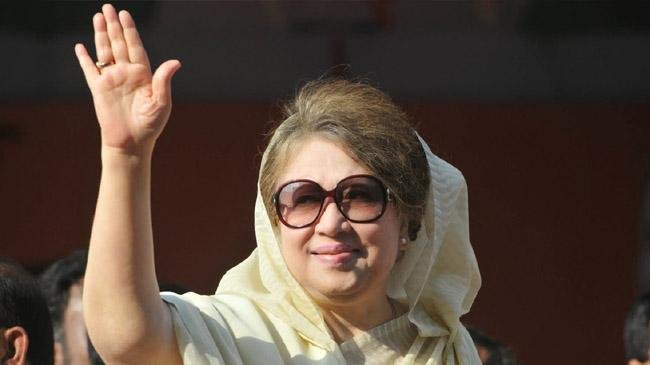

From First Woman PM to Fierce Rivalry: Khaleda Zia’s Three Terms That Redefined Bangladesh Politics
Khaleda Zia, Bangladesh’s first female Prime Minister and one of South Asia’s most influential political figures, passed away today, marking the end of an era in the nation’s political history. As the chairperson of the Bangladesh Nationalist Party (BNP), her rise to power after the assassination of her husband, President Ziaur Rahman, and her eventual leadership in three separate terms reshaped the framework of Bangladesh’s governance, electoral systems, and political culture.
Her death has prompted a nationwide moment of reflection. Supporters mourn a leader who symbolized resilience and democratic transition, while historians and political analysts revisit her legacy with renewed attention. Beyond the immediate shock, her passing forces Bangladesh to confront the impact of her leadership and the polarization that defined the last three decades of its political landscape.
This article explores how her journey from the country’s first woman to lead a democratic government to one half of Bangladesh’s fiercest political rivalry redefined politics, governance, and national identity.
Who Was Khaleda Zia?
Begum Khaleda Zia (1945–2025) was a Bangladeshi politician and the first woman to serve as Prime Minister of Bangladesh, holding office for three terms (1991–1996, 1996, and 2001–2006). She became chairperson of the Bangladesh Nationalist Party (BNP) in 1984 following the assassination of her husband, President Ziaur Rahman. Mother of two sons, the interim chairman of BNP Tarique Rahman and Arafat Rahman. Known for her role in restoring parliamentary democracy and her long-standing political rivalry with Sheikh Hasina, Khaleda Zia’s leadership defined several decades of Bangladesh’s political landscape. Her tenure combined economic reform, institutional transition, and deep political polarization, making her legacy both historic and highly debated.
Breaking a Glass Ceiling: The Woman Who Changed Expectations
Khaleda Zia’s election in 1991 was more than a political victory; it was a cultural shift. Bangladesh, emerging from years of authoritarian rule, returned to parliamentary democracy with a woman at the helm. Her premiership placed Bangladesh alongside a small group of nations with elected female leaders and positioned her as a trailblazer in the Muslim world’s political narrative.
Her tenure introduced or strengthened:
A renewed parliamentary system after the Twelfth Amendment
Increased political participation among women
Structural reforms in government administration
Her rise demonstrated that national leadership in Bangladesh could extend beyond traditional male-dominated political families, even though she herself came from a political legacy connected to her husband.
First Term (1991–1996): Reform, Recovery, Rivalry
Khaleda Zia’s first administration focused on stabilizing key democratic and administrative institutions after years of centralized control. Economic liberalization policies, especially in exports and private-sector industries, contributed to early growth foundations for the future ready-made garment boom.
However, while she rebuilt governance, she also ignited a political rivalry that would dominate Bangladesh for the next 30 years. Disputes with Sheikh Hasina and the Awami League over election oversight and parliamentary practice led to national strikes, parliamentary boycotts, and violent confrontations in the streets.
Key outcomes of this era:
The caretaker government demand took center stage
Parliamentary boycotts became normalized
Competition turned into hostility, defining future elections
While this period marked democratic revival, it also introduced patterns of political instability that continue to echo today.
Transitional Period, 1996: The Turning Point
In 1996, after months of protests and political gridlock, Khaleda Zia stepped aside and a caretaker government was formed to oversee a new election. This event is widely viewed as:
A concession to preserve public trust
A lost opportunity to negotiate bipartisan reforms
The beginning of caretaker-system dependency for Bangladesh’s elections
Her stature grew internationally as someone who accepted a mediated transition, but domestically, the episode deepened mistrust between major parties.
Second Full Term (2001–2006): Expansion and Escalation
Returning to power with a sweeping mandate, Khaleda Zia presided over a period of both economic acceleration and intensified political conflict. Infrastructure projects, industrial expansion, and peacekeeping diplomacy strengthened Bangladesh’s international profile.
However, controversies also mounted:
Allegations of corruption and partisan appointments
Growing human rights concerns, particularly in policing
Accusations of suppressing dissent and media pressure
The line between governance and political struggle blurred. Institutions were pulled into partisan disputes, and public policy became intertwined with electoral strategy.
Still, supporters argue her tenure laid essential groundwork for a stronger economy and diversified diplomatic presence, especially across South Asia and the Middle East.
A Rivalry That Shaped the Nation: Khaleda Zia and Sheikh Hasina
Khaleda Zia’s leadership cannot be separated from her rivalry with Sheikh Hasina. Their adversarial dynamic became the central axis of Bangladeshi politics for over 25 years. No other democratic country has seen two women contest power at this scale for so long, making their rivalry historically unique.
Together, they created a binary national structure:
BNP vs AL
Competing historical narratives (Zia vs Mujib legacy)
Competing economic and social development ideologies
Millions of citizens based political identity on which leader they supported. For younger generations, this rivalry shaped their understanding of politics itself. To this day, it influences media, institutions, business, and civic behavior.
Her Final Years and Passing: The End of a Defining Chapter
In her final years, Khaleda Zia faced significant health challenges and spent prolonged periods away from public activity. Political restrictions, court cases, and medical complications gradually removed her from active political leadership, leaving her party searching for a new anchor.
Her death today closes a chapter that is impossible to replicate or replace. It leaves behind:
A leadership vacuum in the BNP
A symbolic loss for those who valued her as a guardian of multiparty democracy
A moment of reckoning for Bangladesh, which must now evaluate her legacy independently of ongoing political rivalry
She exits the political stage not in transition, but in conclusion marking the end of Bangladesh’s era of two central figures dominating its political identity.
Legacy: How Khaleda Zia Redefined Politics
Khaleda Zia’s impact includes:
Normalizing female leadership in South Asia
Reinforcing the parliamentary system post-military rule
Accelerating industrial and export growth foundations
Creating irreversible partisan division that changed political culture
Her story is not one of flawless governance or uniform approval. It is a story of consequence. Whether praised or criticized, she shaped the framework others now operate within.
Conclusion
Khaleda Zia’s transformation from reluctant political widow to three-term Prime Minister shows the unpredictability and power of democratic leadership. She did not simply participate in political evolution, she catalyzed it.
With her passing, Bangladesh stands at a crossroads. The rivalry that defined its politics has lost one of its central architects. The future of the BNP, and the nature of political competition itself, will shift. But the legacy she leaves contested, influential, undeniably foundational, will remain.
Khaleda Zia’s life proves that leadership is not measured only through achievement or controversy, but through the permanence of impact.


