




Dr. Mahbubul Alam Majumdar: The Mathematician Who Chose Bangladesh Over Global Prestige
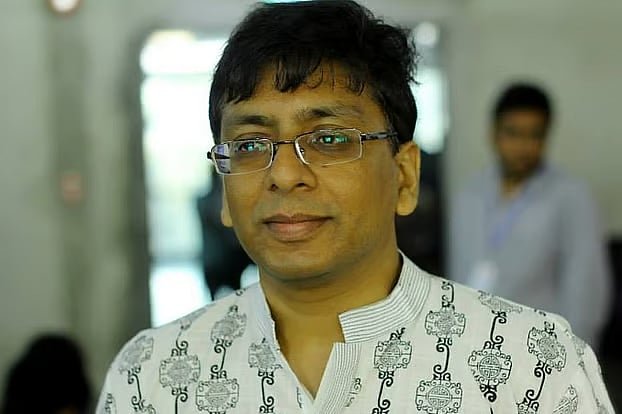

Dr. Mahbubul Alam Majumdar: The Mathematician Who Chose Bangladesh Over Global Prestige
In an academic world often defined by rankings, grants, and global mobility, Dr. Mahbubul Alam Majumdar stands out for a different reason. With academic credentials that span the world’s most elite institutions, including an undergraduate degree from MIT, a master’s degree from Stanford University, and a PhD in mathematics from the University of Cambridge. He could have pursued a career almost anywhere, instead, he chose Bangladesh.
Dr. Majumdar is best known not only as a professor at BRAC University, but also as the national coach of the Bangladesh Mathematical Olympiad team, a mentor who has quietly helped transform the country’s presence on the global mathematics stage.
A Rare Academic Journey
Dr. Mahbubul Alam Majumdar’s academic path is exceptional by any global standard. He studied mathematics at the Massachusetts Institute of Technology (MIT), later completed his master’s degree at Stanford University, and earned his doctorate from the University of Cambridge, an institution historically associated with some of the world’s greatest scientists, including Isaac Newton and Stephen Hawking.
During his time at Cambridge, Dr. Majumdar worked in advanced areas of mathematics and theoretical physics. According to publicly cited accounts, renowned physicist Stephen Hawking once mentioned him among his notable students in a book, an acknowledgment that underscores the level at which Dr. Majumdar was operating academically.
Such a trajectory typically leads to permanent faculty positions in top Western universities, high-paying research roles, or industry positions tied to cutting-edge technology and finance.
But, Dr. Majumdar chose a different direction.
Returning Home
After completing his studies abroad, Dr. Majumdar returned to Bangladesh and joined BRAC University as a faculty member. At a time when “brain drain” remains a major concern for developing countries, his decision stood out.
But teaching university classes was only part of his contribution.
He became deeply involved with the Bangladesh Mathematical Olympiad (BdMO), eventually serving as its unpaid national coach, a role he has continued for more than 15 years. His involvement is not ceremonial. He designs training programs, teaches advanced concepts, and mentors students personally, often over long hours.
Building a Mathematics Culture
The impact of Dr. Majumdar’s work is measurable. Over the past 15 years, Bangladeshi students under his guidance have earned:
- 28 bronze medals
- 7 silver medals
- 1 gold medal
at the International Mathematical Olympiad (IMO) and related global competitions.
Beyond medals, his students have gone on to study at some of the world’s most competitive universities, including MIT, Oxford, Cambridge, Princeton, as well as top institutions in Bangladesh such as BUET and Dhaka University.
For many students, Dr. Majumdar’s classes were transformative. Former students recall that his lectures were often scheduled from 5 PM to 9 PM and felt timeless. Complex ideas such as relativity, abstract algebra, or mathematical logic were explained with clarity and enthusiasm that kept students engaged for hours.
It was not unusual for students from other universities, including BUET and Dhaka University, to attend his sessions unofficially, simply to learn.
Choosing Teaching Over Titles
One story often cited in academic circles involves a student who reportedly left a seat at BUET to enroll at BRAC University, motivated largely by the opportunity to study under Dr. Majumdar. While such decisions are rare in Bangladesh’s competitive education system, they reflect the influence of a teacher whose reputation extends far beyond institutional boundaries.
When asked why he returned to Bangladesh instead of building a career in the West, Dr. Majumdar has offered a perspective that challenges conventional definitions of success.
“What is a career, really? Even if I became an MIT professor or won a Nobel Prize, that would just be a personal achievement. If I can build my country’s young generation, that will be my true success.”
This philosophy underpins his long-standing commitment to the Olympiad program, where he works without salary and with limited resources.
Teaching as Nation-Building
In Bangladesh, mathematics education has traditionally struggled with rote learning, limited exposure to problem-solving, and uneven access to mentorship. Dr. Majumdar’s approach emphasizes conceptual understanding, curiosity, and intellectual rigor.
Rather than focusing solely on competition results, he encourages students to see mathematics as a language, a way of thinking that develops discipline, creativity, and logical reasoning. Many of his former students credit this mindset with shaping not only their academic paths but also their broader approach to learning.
His work also highlights a broader truth: high-level scientific mentorship does not require world-class infrastructure alone. It requires dedication, patience, and belief in students’ potential.
Global Recognition, Local Impact
Although Dr. Majumdar maintains connections with the global academic community, his primary focus remains local. Through workshops, lectures, and informal mentoring, he continues to influence successive generations of Bangladeshi students.
His story has been featured in Bangladeshi media, including Prothom Alo, not as a tale of individual brilliance alone, but as an example of what purposeful education can achieve.
First Bangladeshi to Receive the Spirit of Salam Award
Professor Mahbubul Alam Majumdar, Dean of the School of Data and Sciences and the Department of Computer Science and Engineering at BRAC University, was awarded the prestigious Spirit of Salam Award.
The International Centre for Theoretical Physics (ICTP) announced his selection on Thursday, coinciding with the birth anniversary of Nobel laureate Abdus Salam, after whom the award is named.
Introduced in 2013–14, the Spirit of Salam Award recognises individuals for outstanding contributions to science, education, and the promotion of scientific thinking in developing countries. Although the honour has been conferred on scientists and educators from various nations over the past decade, this marks the first time the accolade has been awarded to a Bangladeshi, underscoring Professor Majumdar’s impact on science education and mentorship at both national and international levels.
A Legacy Beyond Medals
Bangladesh’s growing presence in international mathematics competitions owes much to sustained mentorship rather than short-term interventions. Dr. Majumdar’s students are now researchers, engineers, educators, and scholars across the world—many of whom continue to mentor younger students in turn.
In that sense, his influence is compounding.
In a global system that often rewards personal advancement above all else, Dr. Mahbubul Alam Majumdar represents a quieter, rarer ideal: a scholar who chose to invest his knowledge where it was needed most.
“Some careers are built on accolades. Others are built on impact”