




Passengers Welcome Body Cameras as Biman Boosts Baggage Security Measures

Passengers Welcome Body Cameras as Biman Boosts Baggage Security Measures
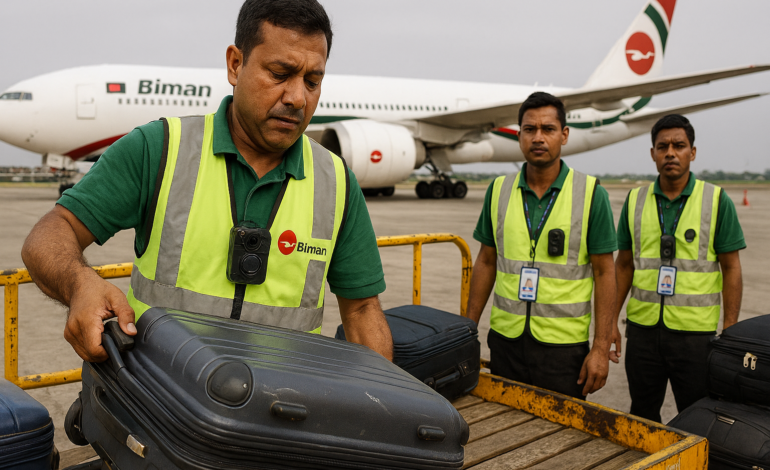
Biman Bangladesh Airlines’ decision to introduce body cameras for baggage handling staff has been widely welcomed by passengers, marking a significant step toward improving transparency, accountability, and trust in the country’s aviation sector. Long criticised for baggage mishandling, theft allegations, and lack of accountability, the national flag carrier is now turning to technology to address a problem that has frustrated travellers for years.
The initiative, recently rolled out at Hazrat Shahjalal International Airport in Dhaka, is being seen as a practical and timely reform, especially as passenger traffic continues to rise and scrutiny over airport services intensifies.
A Long Standing Pain Point for Passengers
For decades, baggage security has remained one of the most sensitive issues for air travellers in Bangladesh. Complaints ranging from delayed luggage to damaged or missing items have frequently surfaced, particularly on international routes used heavily by migrant workers and expatriates.
Passengers have often felt helpless in pursuing complaints, citing the absence of verifiable evidence during baggage handling. In many cases, disputes turned into prolonged investigations without clear conclusions.
The introduction of body worn cameras for baggage handling staff is therefore being viewed as a long overdue measure to close this accountability gap.
How the Body Camera System Works
Under the new system, selected ground handling personnel involved in baggage loading, unloading, and transfer operations are equipped with body cameras during duty hours. These cameras record real time footage of baggage movement from aircraft holds to designated transfer zones.
The recorded data is stored securely and can be reviewed in the event of complaints or investigations. Officials say the footage will serve as an objective record, helping determine responsibility in cases of baggage damage, theft allegations, or mishandling.
While the cameras are not intended for constant surveillance, they are expected to act as a deterrent against misconduct and reinforce professional standards among staff.
Positive Passenger Response
Many passengers have expressed relief and optimism following the announcement.
Frequent flyers say the initiative sends a strong signal that the airline is serious about reform. For overseas workers who often travel with essential belongings and gifts for family members, the move offers reassurance that their luggage will be handled with greater care.
Several passengers described the cameras as a confidence boosting measure that could reduce anxiety during travel. For them, the presence of cameras symbolises accountability rather than suspicion.
Travel analysts note that restoring trust is critical for any airline, particularly a national carrier that represents the country on international routes.
Building Accountability Through Technology
The use of body cameras in aviation ground handling is not entirely new globally. Airports and airlines in several countries have experimented with wearable technology to improve transparency and operational discipline.
Experts say such tools serve two purposes. First, they deter intentional wrongdoing by increasing the likelihood of detection. Second, they protect staff from false accusations by providing factual evidence.
In Biman’s case, the cameras are expected to help resolve disputes more efficiently and fairly, reducing prolonged investigations and improving complaint resolution timelines.
Impact on Staff and Operational Culture
While passengers have largely welcomed the initiative, its success also depends on how it is implemented internally.
Aviation experts emphasise that body cameras should be accompanied by proper training, clear guidelines, and respect for employee dignity. Staff must understand that the technology is meant to improve systems rather than single out individuals.
If managed transparently, the cameras could contribute to a cultural shift within baggage handling operations, promoting professionalism, discipline, and pride in service quality.
Industry insiders note that frontline aviation workers often operate under intense pressure. Clear procedures and accountability mechanisms can help create a more structured and respectful working environment.
Privacy and Ethical Considerations
As with any surveillance related measure, privacy concerns have also been raised. Aviation authorities stress that footage will be used strictly for operational and investigative purposes, with access limited to authorised personnel.
There are assurances that recordings will not be misused or publicly disclosed, and that staff privacy will be respected in accordance with internal policies and legal standards.
Balancing security and privacy will be crucial in determining public and employee acceptance of the initiative in the long term.
Restoring Confidence in Biman’s Services
Biman Bangladesh Airlines has faced challenges in recent years related to service quality, punctuality, and customer satisfaction. While improvements have been made in fleet modernisation and route expansion, ground services have often lagged behind.
Observers see the introduction of body cameras as part of a broader effort to modernise operations and improve the airline’s image.
For international travellers, baggage security is a key factor in airline choice. Strengthening this area could enhance Biman’s competitiveness, particularly on routes serving South Asia, the Middle East, and Europe.
A Step Toward Industry Wide Reform
Aviation analysts believe Biman’s move could set a precedent for other airlines and airport operators in Bangladesh. If successful, similar measures could be adopted across domestic airports and by private ground handling services.
Improved baggage security would benefit not only passengers but also the country’s aviation reputation. As Bangladesh positions itself as a growing aviation hub in South Asia, service quality and reliability will play a decisive role.
The initiative also aligns with global trends toward smart airports, where technology is used to enhance safety, efficiency, and passenger experience.
What Passengers Can Expect Next
Passengers are advised that the new system will not change check in procedures or baggage allowances. Instead, it operates behind the scenes, focusing on handling processes after bags are checked in.
Aviation officials say feedback from passengers will be monitored closely, and adjustments will be made as necessary to ensure the system delivers tangible benefits.
If early results are positive, the program may be expanded to include additional staff and operational zones.
Conclusion
The introduction of body cameras for baggage handling staff marks a meaningful step in Biman Bangladesh Airlines’ efforts to address one of the most persistent concerns among air travellers. By embracing technology to enhance accountability, the airline is responding directly to passenger expectations for transparency and professionalism.
While challenges related to implementation and privacy remain, the overwhelmingly positive passenger response suggests that trust can be rebuilt when reforms target real problems.
If sustained and managed effectively, this initiative could help transform baggage security standards in Bangladesh’s aviation sector, offering travellers greater peace of mind and reinforcing confidence in the national carrier.