


Cricket, Politics, and Solidarity: How Bangladesh’s T20 World Cup Boycott Echoed Across South Asia

Cricket, Politics, and Solidarity: How Bangladesh’s T20 World Cup Boycott Echoed Across South Asia
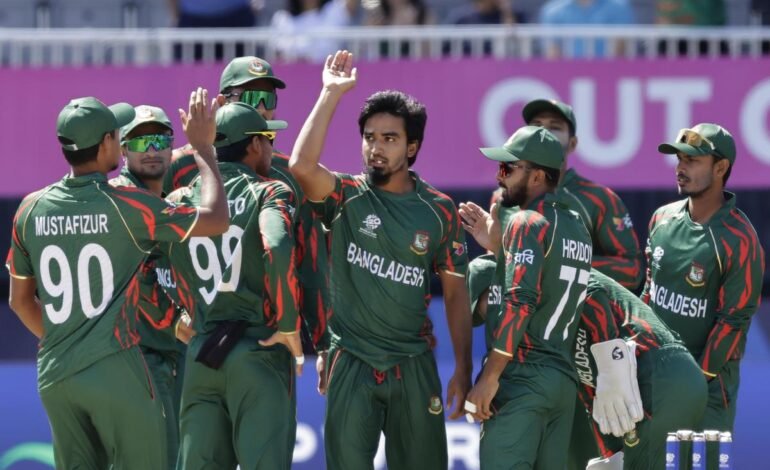
When the Bangladesh Cricket Board (BCB) confirmed that the national team would not travel to India for the ICC Men’s T20 World Cup 2026, it raised questions that went far beyond sport. The decision, rooted in security concerns and unresolved diplomatic tensions, sparked widespread reactions across cricket fraternity.
In an unprecedented show of solidarity, Pakistan’s Prime Minister Shehbaz Sharif endorsed Bangladesh’s stance, calling on global cricket authorities to respect their decision and support a boycott of matches in India. His comments have added a political dimension to what should have been a purely sporting event, underscoring how cricket remains deeply intertwined with geopolitics in the region.
A Decision Born from Deep Concerns
Bangladesh’s choice not to travel to India was not made lightly. The BCB and the Bangladesh government expressed “serious concerns” about security and broader political issues, seeking a change of venue for their T20 World Cup matches to co-host Sri Lanka. These requests were repeatedly rejected by the International Cricket Council (ICC), which maintained that there was no credible threat to the Bangladeshi team.
With the tournament scheduled to begin in early February 2026 and matches lined up in Kolkata and Mumbai, Bangladesh ultimately chose to withdraw rather than send a team under conditions they deemed unsafe and unacceptable.
This was not just a sporting protest; it was a stance rooted in governance, national dignity, and trust in international sporting institutions.
Pakistan’s Support: More Than Just Cricket Diplomacy
The reaction from Pakistan’s highest political office marked a rare moment of regional empathy in South Asia’s fraught political landscape. Prime Minister Shehbaz Sharif publicly stated that his government “completely stands with Bangladesh’s decision” and urged cricket authorities and fans to support a boycott of the match in India.
Sharif’s endorsement carried symbolic weight. Cricket is one of the most emotionally charged institutions uniting Bangladesh and Pakistan — both nations share histories of colonial subjugation, partition trauma, and intense sporting rivalries. His support transformed Bangladesh’s choice into a broader narrative about sporting solidarity among Muslim-majority neighbours in South Asia.
For many fans in Pakistan, Bangladesh’s dilemma mirrored their own past disputes with Indian cricket boards and administrators over touring rights, security protocols, and political interference in sport.
When Sport Meets Politics
Cricket and politics have intersected repeatedly in South Asia’s modern history. India’s refusal to tour Pakistan for the 2025 ICC Champions Trophy, leading to neutral-venue matches in UAE, set a precedent for how political tensions can reshape sporting calendars.
Bangladesh’s stance echoes that episode, not in terms of political rivalry, but in how national governments and cricket boards justify decisions based on safety perceptions and broader diplomatic climates.
Sharif’s comments implicitly drew that parallel, suggesting that if India could defend its position on venue changes in 2025, then Bangladesh’s decision deserves equal respect.
Fan Reaction: Divided Yet Passionate
Among cricket fans, reactions were predictably diverse.
Supportive Voices
Segments of fans particularly in Pakistan, Bangladesh hailed the solidarity, framing it as a stand against politicised scheduling and perceived bias within international cricket governance.
Critics and Purists
Meanwhile, purist cricket supporters voiced concern that such decisions muddy the spirit of sport. For them, the World Cup should be a celebration of cricket, untainted by geopolitics. They argued that players train for years for such moments, and missing the tournament could be a setback for talent development.
Some foreign commentators saw the situation differently, describing it as a sign of how fragile international sporting commitments have become when set against contemporary diplomatic challenges.
Impact on Cricketing Ecosystems
For Bangladesh Cricket
The immediate consequence was that Bangladesh’s place in the tournament was replaced by Scotland, based on ICC ranking criteria. This means that a generation of players will miss the global stage, an event that plays a significant role in exposure, experience, and market valuation for players.
The decision also sparked debate within Bangladesh’s cricket ecosystem about governance, player welfare, and the extent to which boards should assert national interests in global sports platforms.
For Regional Competitions
Sharif’s endorsement adds a new facet to sport diplomacy in the region. While Pakistan and India have long had a complicated cricket relationship, this development may lead to deeper conversations within the Asian Cricket Council and among BCB, PCB, and other boards about shared policies on security, scheduling, and player autonomy.
ICC’s Position: Neutrality and Practical Constraints
The ICC’s rejection of Bangladesh’s request to shift venues was based on formal security assessments and logistical constraints, including the proximity of the tournament’s start date.
In its communications, the ICC emphasised:
- Extensive risk assessments from independent experts
- Government commitments on security protocols
- The impracticality of rescheduling or relocating fixtures close to the event
By focusing on procedural reasoning rather than political context, the ICC maintained its stance of neutrality.
However, critics argue that this approach prioritises bureaucratic consistency over player welfare, a debate that will continue to influence future global sporting policies.
Cricket as a Lens on Regional Relations
Cricket has often been called a mirror of political relations in South Asia. The game brings passion, pride, rivalry, and unity. It has been both a bridge and a battleground.
Bangladesh and Pakistan’s shared moment of solidarity reflects how sport can transcend rivalry when national interests align.
This latest chapter highlights two truths:
- Sport cannot be entirely separated from socio-political context in South Asia.
- National identity and diplomacy influence how countries engage with global institutions, including the ICC.
What This Means for Global Cricket
The boycotts and endorsements surrounding the T20 World Cup raise important questions for international sport:
1. Player-Centric Policies
Will international bodies adopt stronger player safety frameworks that accommodate legitimate security concerns, even when political pressure exists?
2. Unified Regional Standards
Is there room for a collaborative Asian security protocol for touring teams, endorsed by SAARC members, to depoliticise touring decisions?
3. Balancing Neutrality and Compassion
How can governing bodies balance rigid scheduling demands with empathy for national sentiments and bilateral tensions?
The answers will likely shape cricket governance in the coming decade, especially as the sport continues to globalise and as regional boards assert their voices more confidently.
A Moment Greater Than Cricket
Bangladesh’s decision to boycott its T20 World Cup matches in India, and Pakistan’s public support led by Prime Minister Shehbaz Sharif, is not just about a cricket tournament. It illustrates how sport, nationalism, and diplomacy are deeply interconnected.
For fans, players, and policymakers alike, the episode underscores that cricket remains more than a game. It is a platform for expression, identity, and collective memory, one that can unite and divide in equal measure.