




Bangladeshi Student Hafez Ibrahim Sheikh Wins First Place at International Quran Competition in Malaysia
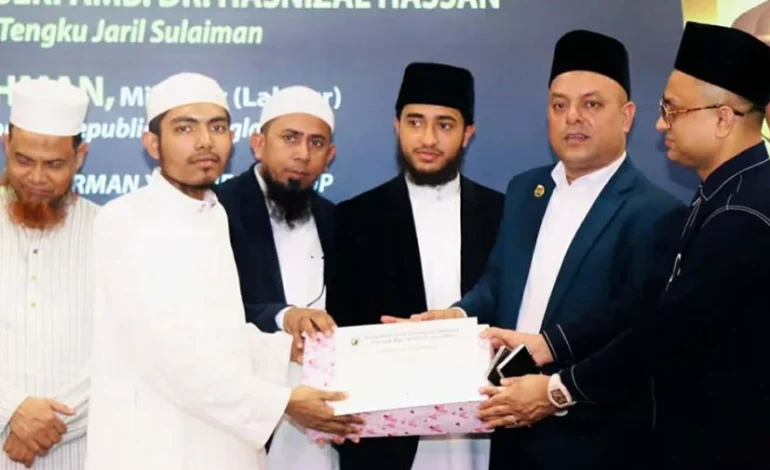
In a moment of pride for Bangladesh’s religious education community, Hafez Ibrahim Sheikh secured first place at an International Quran Competition held in Kuala Lumpur, Malaysia, in March 2026. His achievement highlights the strength of Bangladesh’s tradition of Quran memorization and recitation, which has produced many talented huffaz over the years.
The competition brought together participants from across the world and celebrated excellence in Quran memorization, pronunciation, and recitation techniques. Ibrahim Sheikh’s victory not only marks a personal milestone but also reinforces Bangladesh’s growing reputation in global Quranic competitions.
International Quran Competition in Kuala Lumpur
The international event was organized by the Bangladeshi Youth Community in Kuala Lumpur, a group known for promoting cultural and religious activities among the Bangladeshi diaspora in Malaysia.
The competition attracted contestants from 28 countries, reflecting the global appeal of Quran recitation contests and the shared Islamic tradition of memorizing and reciting the Quran.
Participants came from countries across Asia, the Middle East, and Africa, including India, Pakistan, Thailand, and Malaysia. Each contestant demonstrated their mastery of Quranic recitation through carefully judged performances based on several criteria, including:
- Accuracy of memorization
- Correct Tajweed (rules of Quranic pronunciation)
- Melodic recitation
- Confidence and composure during recitation
After several rounds of evaluation, the judges selected the top three winners from the international pool of participants.
Top Winners of the Competition
The final results placed contestants from three different countries on the podium:
- Hafez Ibrahim Sheikh (Bangladesh) – 1st Place
- Hafez Nurul Abshar (Malaysia) – 2nd Place
- Hafez Sayedur Rahman (Thailand) – 3rd Place
The results were celebrated by the Bangladeshi community in Malaysia, many of whom attended the event to support participants representing Bangladesh.
Ibrahim Sheikh’s victory was particularly meaningful for Bangladeshi expatriates, who view such achievements as a reflection of the country’s strong Islamic education system.
A Student of Madrasa Ummul Qura
The champion reciter, Hafez Ibrahim Sheikh, is a student of Madrasa Ummul Qura, an Islamic educational institution known for training students in Quran memorization and Islamic studies.
The madrasa operates under the guidance of Shaykh Saad Saifullah Madani, whose leadership and teaching methods have helped nurture many talented Quran students.
Teachers at the madrasa emphasize both memorization of the Quran (Hifz) and proper Tajweed, ensuring that students learn to recite the Quran accurately and beautifully.
Ibrahim Sheikh’s victory reflects years of dedication, discipline, and rigorous training under experienced scholars and instructors.
Bangladesh’s Tradition of Quran Memorization
Bangladesh has a long and respected tradition of producing skilled Quran memorizers and reciters. Across the country, thousands of madrasas and Islamic schools provide specialized programs where students memorize the entire Quran.
Many Bangladeshi students begin memorizing the Quran at a young age, often completing the process within a few years through structured daily lessons.
This strong tradition has enabled Bangladeshi participants to perform well in regional and international Quran competitions.
Victories like Ibrahim Sheikh’s highlight the dedication of teachers, scholars, and students who contribute to preserving the art of Quranic recitation.
The Importance of International Quran Competitions
International Quran competitions are held in many Muslim-majority countries and serve several important purposes.
First, they encourage young Muslims to memorize and understand the Quran. Competitions provide motivation for students to maintain high standards of recitation and pronunciation.
Second, they promote cultural exchange among Muslim communities worldwide. Participants from different countries share recitation styles and traditions while celebrating a common spiritual heritage.
Third, these competitions strengthen religious education networks by bringing scholars, judges, and students together in an environment focused on learning and spiritual growth.
For many participants, even reaching the final stages of an international Quran competition is considered a major achievement.
Global Recognition of Quran Reciters
While Ibrahim Sheikh’s victory in Malaysia has drawn attention in Bangladesh, it is part of a broader global trend in which Quran reciters from different countries continue to gain recognition.
Recent examples include:
Nigeria’s Hajara Ibrahim Dan’azumi
Hajara Ibrahim Dan’azumi was crowned the world’s best Quran reciter at the Women’s International Hashemite Quran Competition held in Jordan.
The prestigious competition attracts female Quran reciters from across the world and is widely respected within the global Islamic community.
Ibrahim Muhammad Nasir of Nigeria
Another Nigerian reciter, Ibrahim Muhammad Nasir, secured second place in the King Abdulaziz International Quran Competition, one of the most prestigious Quran competitions held in Saudi Arabia.
The event draws elite reciters from dozens of countries and is recognized as one of the highest levels of Quranic competition globally.
Mustafa Mohammed Ibrahim of Kenya
Meanwhile, Mustafa Mohammed Ibrahim won the 30 Juz category at the Masjid Al-Huda Quran Competition held in March 2026.
His victory highlighted Kenya’s growing presence in Quranic competitions.
Inspiration for Young Quran Students
The achievements of reciters like Ibrahim Sheikh serve as powerful inspiration for young students studying the Quran around the world.
For many aspiring huffaz, seeing peers succeed on international stages motivates them to continue memorization and perfect their recitation.
Teachers often emphasize that Quran memorization requires:
- Daily discipline
- Strong commitment
- Respect for teachers and mentors
- Continuous practice of Tajweed rules
These values help students develop not only their recitation skills but also character and spiritual awareness.
Pride for Bangladesh’s Religious Education
Ibrahim Sheikh’s victory has generated pride among educators, scholars, and members of Bangladesh’s Islamic community.
For Bangladeshis living abroad, especially in Malaysia, the achievement symbolizes the country’s strong commitment to Islamic learning.
Religious scholars have praised the dedication of students like Ibrahim Sheikh, noting that such success reflects the collective efforts of families, teachers, and institutions that nurture Quran education.
Looking Ahead
As international Quran competitions continue to grow in popularity, students from Bangladesh are likely to participate in even more global events in the future.
Achievements like this not only highlight individual excellence but also strengthen Bangladesh’s reputation as a country that values Quranic education and spiritual scholarship.
For Hafez Ibrahim Sheikh, the victory in Kuala Lumpur represents a major milestone in his journey as a Quran reciter and a moment of pride for Bangladesh on the international stage.