




Bangladeshi Climbers Conquer Mera Peak — A Landmark Achievement
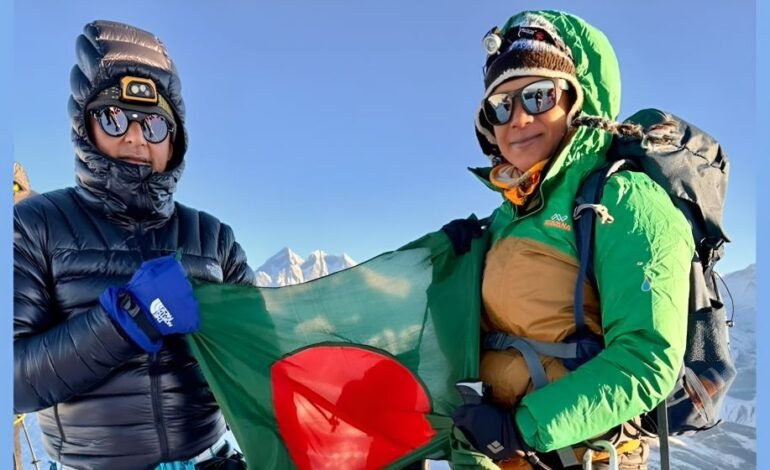
In a proud moment for Bangladeshi mountaineering, two climbers from Bangladesh, Imtiaz Elahi (a former army officer) and Dr Shahnaz (a dentist by profession), successfully reached the summit of Mera Peak (6,476 metres) in Nepal’s Khumbu region. They raised the Bangladeshi flag at 6:45 a.m. local time after departing Mera High Camp around 2:30 a.m. on the summit day.
The climb was led by noted Sherpa mountaineer Tashi Galjen Sherpa, offering expert guidance and strong support for the challenging high-altitude expedition.
For Dr Shahnaz, this was especially historic as it marked her first summit above 6,000 metres, and she called the success “an extremely joyful moment,” expressing hope to scale more peaks representing the Bangladeshi flag.
Why Mera Peak Matters: Nepal’s Highest Trekking Summit
Mera Peak is located in Nepal’s Mahalangur section of the Himalayas and stands at 6,476 metres. It is celebrated as the highest officially designated “trekking peak” in Nepal.
Though technically less demanding than the major 8,000 m peaks, Mera Peak still demands high-altitude fitness, acclimatisation, and mental strength. Climbers often traverse glaciers, snow and ice slopes, and make summit pushes in sub-zero temperatures.
What makes Mera Peak particularly appealing for climbers worldwide is the spectacular panoramic view it offers from the summit: on a clear day, one can see five of the world’s highest 8,000-metre peaks, Mount Everest, Kanchenjunga, Lhotse, Makalu, and Cho Oyu, plus other snow-clad summits.
Because of its combination of manageability and Himalayan grandeur, Mera Peak attracts climbers from around the world from first-time Himalayan trekkers to seasoned mountaineers. For Bangladesh, the successful ascent by Imtiaz and Dr. Shahnaz places the nation firmly on the Himalayan adventure map.
What This Victory Means for Bangladesh’s Adventure Community
Global Recognition of Bangladeshi Mountaineering Talent
By conquering a high-altitude Himalayan peak such as Mera Peak, Bangladeshi climbers send a message that their ambition and training are capable of overcoming one of the toughest terrains on Earth. This restores confidence among adventure lovers in Bangladesh, encouraging more to explore mountaineering beyond local hills.
Inspiration for Women and Young Climbers
Dr Shahnaz’s success especially being her first 6,000 m-plus summit is a powerful inspiration for women and younger generations in Bangladesh. Mountaineering remains male-dominated in South Asia; her achievement challenges stereotypes and opens doors for more inclusivity in adventure sports.
Supporting Club-based Expeditions and Mountain Culture
The expedition is part of the ongoing efforts of the Bangla Mountaineering and Trekking Club, which has organised numerous trips into the Himalayas. This climb marks their 44th organised expedition.
As more Bangladeshi mountaineers venture into international climbs, a culture of mountain-based tourism and adventure sports could grow, helping diversify Bangladesh’s sporting and recreation culture beyond conventional arenas.
The Challenge Behind the Summit: What It Takes to Climb Mera Peak
Although Mera Peak is considered “trekking-peak level,” it is still a serious mountain challenge — particularly in the final push. Climbers must:
-
Trek through remote Himalayan terrain, including forests and mountain passes, before reaching high-altitude camps.
-
Cross glaciers using crampons, and utilise ice axe and fixed-rope sections close to the summit.
-
Acclimatize gradually to prevent altitude sickness, the air is thin, and oxygen drops significantly above 5,000 metres.
-
Tolerate freezing temperatures (night-time can dip to –25 °C), snow, wind, and unpredictable weather during summit push.
Because of these challenges, success demands physical fitness, mental strength, experienced guides, and careful preparation.
A Broader Himalayan and Global Context
Mera Peak is part of the grand Himalayan chain, a natural border across South Asia that spans Nepal, India, Pakistan, Bhutan, Tibet. Mountains of the Himalaya have drawn adventurers, pilgrims, scientists, and trekkers for decades. Each successful foreign ascent reinforces Nepal’s legacy as the world’s premier mountaineering destination.
Bangladesh’s growing involvement in Himalayan mountaineering illustrates a more globalized trend: South Asian climbers from humble lowland countries stepping into high-altitude mountaineering. Climbers from coastal or deltaic nations like Bangladesh symbolise a bridging of geographic, cultural, and socio-economic divides, showing that love for mountains is universal.
Also, successful ascents by climbers from countries with limited alpine traditions encourage cross-border mountaineering exchange, tourism diplomacy, and global solidarity in adventure sport.
What Comes Next: Building a Mountaineering Future for Bangladesh
The recent Mera Peak success could pave the way for more ambitious climbs by Bangladeshis even above 7,000 m or 8,000 m peaks in the future. But to sustain momentum, certain measures could help:
-
Investing in mountaineering training: Basic snow and ice training, high-altitude simulation, rescue training, and acclimatization protocols.
-
Supporting clubs and expeditions: Funding, equipment support, and cooperation with international expedition agencies.
-
Promoting inclusive participation: Encouraging women, young people, and underrepresented groups to join hikes and treks.
-
Building mountaineering awareness and safety culture: Emphasizing safety, environment protection, and ethical trekking practices.
-
Strengthening regional cooperation: Working with Nepalese authorities and Sherpa communities to support cross-border adventure tourism.
If implemented, these steps could help transform Bangladesh into a country with a strong tradition of Himalayan adventure and responsible mountaineering.
Beyond the Summit — A Symbol of Courage, Hope, and Global Spirit
The ascent of Mera Peak by Imtiaz Elahi and Dr. Shahnaz is more than a personal victory. It is a milestone for Bangladesh and a proof that with determination, training, and courage, even a country without high mountains can touch Himalayan skies.
Their climb brings Bangladesh into the map of global adventure, offers inspiration to future generations, and demonstrates how mountaineering can serve as a bridge between nations, cultures, and people.
As the echoes of their footsteps fade in the snow-capped ridges of Nepal, a new chapter begins: one where Bangladeshi flags may flutter on more Himalayan summits, and where the spirit of adventure grows stronger than ever.