





Bangladesh U-20 Women Make Dismal Exit: What Went Wrong?
A Disappointing End to Bangladesh’s Campaign
The Bangladesh women’s national under-20 football team endured a disappointing campaign as they made an early exit from the AFC Under-20 Women’s Asian Cup 2026 with a 1-0 defeat to Vietnam, failing to meet expectations after a series of underwhelming performances.
The team’s elimination highlights both immediate shortcomings and deeper structural issues within youth women’s football in Bangladesh. Despite entering the competition with optimism, their performances fell short against stronger and more organized opponents.
Bangladesh’s Campaign in Asian Cup Debut
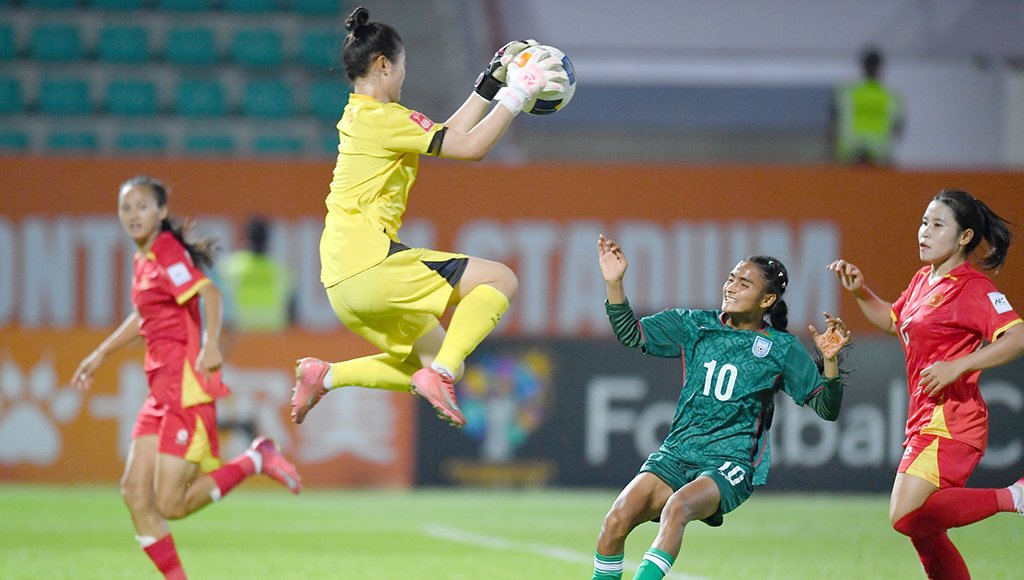
Bangladesh women’s national under-20 football team began with a dramatic 3-2 defeat to hosts Thailand despite taking a two-goal lead, showing early promise but ultimately collapsing under pressure. Their second match saw a more controlled but ineffective performance, as they lost 2-0 to China, struggling to create meaningful chances while conceding defensively.
The final match against Vietnam summed up their campaign, a closely contested game decided by a single moment. Bangladesh conceded in the 49th minute when a rebound fell to Nguyen Thi Thùy Linh, who capitalised after goalkeeper Mile Akter’s initial save, sealing a 1-0 defeat.
Across all three matches, Bangladesh showed flashes of potential but lacked the consistency, defensive organisation, and finishing ability needed to compete at this level, ultimately leading to their early exit.
Tournament Performance: A Struggle from Start to Finish
Bangladesh’s campaign was marked by inconsistency and a lack of competitiveness.
Across their matches, the team struggled to:
- Maintain defensive solidity
- Create clear scoring opportunities
- Convert chances into goals
Their inability to control games and respond under pressure ultimately led to a winless or low-point finish, sealing their early exit.
In modern tournament football, even small tactical lapses can prove costly and Bangladesh paid the price repeatedly.
Key Statistical Concerns
A closer look at the team’s overall performance reveals several worrying trends.
1. Goal Scoring Issues
Bangladesh’s attacking output was limited, with very few goals scored throughout the tournament. This reflects a lack of creativity in the final third and poor finishing.
2. Defensive Vulnerability
The team conceded multiple goals across matches, indicating:
- Weak defensive coordination
- Difficulty handling counterattacks
- Poor marking in key situations
3. Possession and Control
Bangladesh often struggled to dominate possession, allowing opponents to dictate the pace of the game.
These statistics highlight a gap in both technical execution and tactical discipline.
Tactical Weaknesses Exposed
The tournament exposed several tactical shortcomings in the Bangladesh setup.
Lack of Midfield Control
The midfield failed to link defense and attack effectively, resulting in:
- Isolated forwards
- Limited build-up play
- Frequent turnovers
Ineffective Pressing
Bangladesh struggled to press opponents high up the pitch, allowing teams to build attacks comfortably.
Poor Transition Play
Quick transitions from defense to attack were largely absent, making it difficult to capitalize on counterattacking opportunities.
Comparison with Regional Rivals
Bangladesh’s performance becomes more concerning when compared to regional competitors.
Teams like Uzbekistan, Nepal, and others in Asia have shown significant improvement in youth women’s football, focusing on:
- Structured development programs
- Regular international exposure
- Investment in coaching and infrastructure
In contrast, Bangladesh still appears to be catching up, particularly in terms of tactical awareness and physical conditioning.
Psychological and Experience Factors
Youth tournaments are not just about skill they are also about mental strength.
Bangladesh’s players appeared to struggle with:
- Handling pressure
- Maintaining composure after conceding goals
- Responding to setbacks during matches
Limited exposure to high-level international competition may have contributed to these challenges.
Developmental Gaps in Women’s Football
The early exit also reflects broader issues in the development of women’s football in Bangladesh.
Limited Grassroots Programs
While progress has been made, grassroots development remains inconsistent.
Lack of Competitive Exposure
Regular international matches are crucial for development, but opportunities remain limited.
Infrastructure Challenges
Training facilities, coaching resources, and investment still lag behind leading nations.
Addressing these gaps is essential for long-term improvement.
Bright Spots Amid Disappointment
Despite the poor results, there were some positives.
- Individual players showed flashes of skill and potential
- The team demonstrated resilience in difficult moments
- Participation itself provides valuable experience
These elements can serve as a foundation for future development if properly nurtured.
Lessons for the Future
The campaign offers several important lessons for Bangladesh football authorities.
1. Invest in Youth Development
Building a strong pipeline of talent requires sustained investment in youth programs.
2. Improve Coaching Standards
Modern football demands advanced tactical knowledge and training methods.
3. Increase International Exposure
Regular participation in international tournaments helps players gain confidence and experience.
4. Focus on Fitness and Conditioning
Physical fitness is a key factor in competing at the highest level.
Role of the Bangladesh Football Federation
The responsibility for improving women’s football lies largely with the Bangladesh Football Federation.
The BFF must:
- Strengthen youth leagues
- Provide better training facilities
- Support coaches and players
- Create long-term development strategies
Without systemic changes, similar outcomes may continue in future tournaments.
Fan Expectations and Public Reaction
Fans had high hopes for the U-20 team, especially after recent progress in women’s football at the senior level.
The early exit has led to disappointment, but also calls for reform. Supporters are increasingly aware of the need for:
- Better planning
- Transparent management
- Consistent development
Public pressure could play a role in driving change.
The Bigger Picture
Bangladesh women’s football has shown promise in recent years, particularly at the senior level. However, the gap between youth and senior performance remains a concern.
A strong youth system is essential for sustaining success at the top level. Without it, progress at the senior level may not be sustainable.
In a Nutshell
The early exit of the Bangladesh U-20 women’s team is a setback, but it also serves as a wake-up call.
The campaign exposed weaknesses in tactics, preparation, and development but it also highlighted areas for improvement.
If the lessons from this tournament are taken seriously, Bangladesh can rebuild and come back stronger. The future of women’s football in the country depends on how effectively these challenges are addressed.
For now, the disappointment is real but so is the opportunity to learn, adapt, and grow.


