



Bangladesh U-20 Hold India to 1-1 Draw: A Fighting Performance That Signals Growing Promise
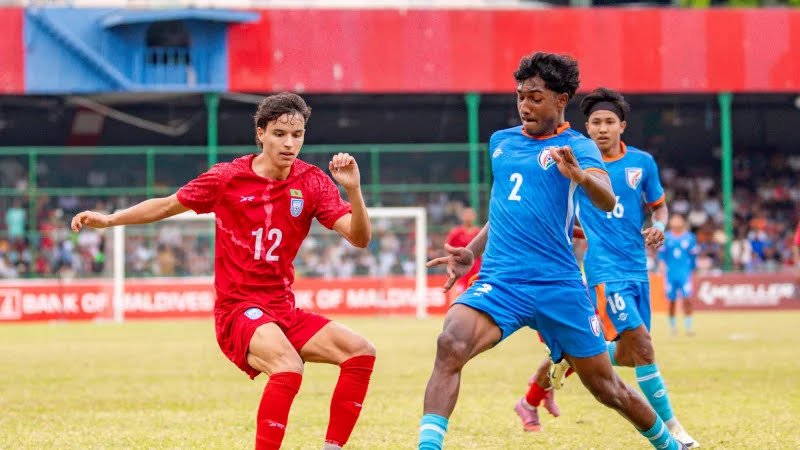
Bangladesh’s 1-1 draw against India in the SAFF U-20 Championship was more than just a group-stage result but a powerful display of resilience, tactical discipline, and emerging football talent. In a match filled with intensity and late drama, Bangladesh proved they are no longer just participants but serious competitors capable of challenging traditional powerhouses.
Facing a strong Indian side, Bangladesh had to dig deep, especially after conceding early in the match. But instead of collapsing under pressure, the team showed composure, patience, and belief that ultimately led to a dramatic equalizer and secured their place in the semifinals.
Early Setback Tests Bangladesh’s Resolve
The match began at a high tempo, with India looking to assert dominance from the opening minutes. Their intent paid off early when Vishal Yadav found the net in the 16th minute, heading in from a corner to give India the lead.
For Bangladesh, this was a critical moment. Conceding early against a team like India often leads to defensive retreat and loss of momentum. However, this time, the response was different.
Instead of panicking, Bangladesh maintained structure and continued to execute their game plan. The players remained disciplined in their positioning, ensuring that India could not easily extend their lead. This composure under pressure marked a significant improvement in Bangladesh’s approach to high-stakes matches.
Gradual Comeback: Building Momentum
As the game progressed, Bangladesh began to grow into the match. Their midfield started to gain control, disrupting India’s rhythm and creating opportunities to move forward.
Rather than relying on rushed attacks, Bangladesh focused on building possession gradually. This patient approach allowed them to:
- Reduce defensive errors
- Create more organized attacking phases
- Maintain energy levels throughout the match
The second half saw Bangladesh push forward with greater intent, while still remaining cautious at the back. This balance between attack and defense was key to keeping the game within reach.
A Goal That Changed Everything
Bangladesh delivered a moment of brilliance deep into stoppage time of the first half, when Ronan Sullivan sent in a precise cross into the box and Abdul Riyad Fahim met the ball with a powerful volley, sending it past the goalkeeper and into the net.
The equalizer sparked celebrations and completely shifted the narrative of the match.
This goal was not just about technique; it was about timing, awareness, and belief. Bangladesh showed they could remain focused until the very last minute, a crucial trait for any competitive team.
Group Stage Outcome: Bangladesh Move Forward
The draw ensured that both Bangladesh and India finished the group stage with four points from two matches. However, India topped the group due to a superior goal difference, leaving Bangladesh as runners-up.
Despite finishing second, Bangladesh achieved their primary objective: qualification for the semifinals.
They are now set to face Nepal in a crucial knockout match, while India will take on Bhutan. This stage of the tournament will test Bangladesh’s ability to maintain consistency and handle pressure in decisive fixtures.
Key Performers: Youth Talent on Display
The match highlighted several standout performances from the Bangladesh squad.
Ronan Sullivan once again proved his importance to the team. After scoring twice in the opening match against Pakistan, he continued to influence play with his creativity and vision. His assist for the equalizer demonstrated his ability to deliver under pressure.
Abdul Riyad Fahim, coming off the bench, made an immediate impact. His late goal not only rescued a point but also showcased his composure and finishing ability in a high-pressure situation.
Goalkeeper Ismail Hossain Mahin also played a crucial role, maintaining stability at the back despite India’s early dominance.
These performances highlight the depth and potential within Bangladesh’s youth setup.
Momentum from Earlier Success
Bangladesh entered the match with confidence after defeating Pakistan 2-0 in their opening game. That victory, powered by Sullivan’s brace, set the tone for their campaign.
India, too, had started strongly with a convincing 3-0 win over Pakistan, making this clash a decisive battle for group supremacy.
Given the stakes, the intensity of the match was expected and both teams delivered. However, Bangladesh’s ability to recover from a losing position added a new dimension to their campaign.
Tactical Growth: A New Identity Emerging
One of the most encouraging aspects of Bangladesh’s performance was their tactical maturity.
In previous years, matches against stronger teams often saw Bangladesh adopt a purely defensive approach. This time, however, the team displayed a more balanced strategy.
Key tactical improvements included:
- Maintaining a compact defensive structure
- Transitioning quickly from defense to attack
- Utilizing substitutions effectively
This evolution suggests that Bangladesh’s youth teams are developing a clearer football identity one that combines discipline with ambition.
What This Means for Bangladesh Football
The draw against India is part of a broader trend: Bangladesh football is steadily improving at the youth level.
Investment in training, increased exposure to international competition, and better player development programs are beginning to show results. Competing evenly with a team like India indicates that the gap between the two nations is narrowing.
For Bangladesh, this is an important milestone. It reflects not just individual performances, but systemic progress within the football structure.
Challenges Ahead: Turning Promise into Results
While the draw is a positive outcome, Bangladesh still faces key challenges.
Consistency remains a major factor. Performing well in one or two matches is not enough—teams must maintain that level throughout the tournament.
Areas that need improvement include:
- Finishing scoring opportunities more efficiently
- Maintaining intensity for the full duration of matches
- Avoiding lapses in concentration during set-pieces
Addressing these issues will be crucial as Bangladesh prepares for the semifinal against Nepal.
A Draw That Reflects Growth and Belief
Bangladesh’s 1-1 draw against India was not just about sharing points it was about demonstrating growth, resilience, and belief.
From recovering after an early setback to scoring a dramatic equalizer, the team showed qualities that are essential for success in competitive football.
More importantly, the performance signals a shift in Bangladesh’s football narrative. The team is no longer content with participation, they are aiming to compete, challenge, and succeed.
As they move into the semifinals, this fighting spirit could prove to be their greatest strength.


