



Bangladesh to Experience Total Lunar Eclipse ‘Blood Moon’
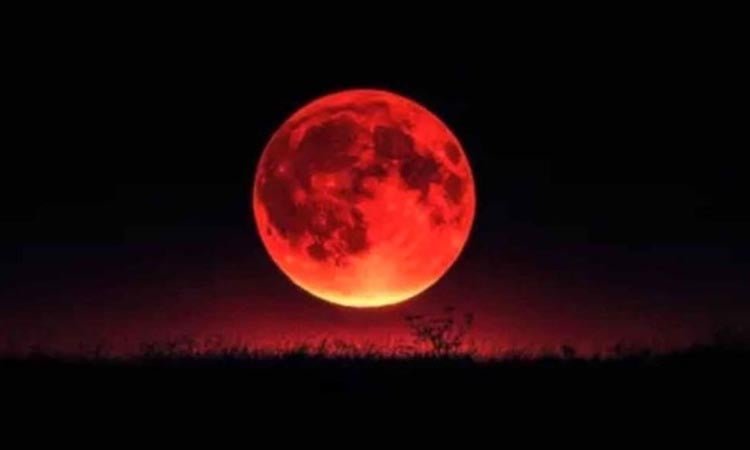

Bangladesh to Experience Total Lunar Eclipse ‘Blood Moon’
A total lunar eclipse, one of the most spectacular astronomical events of the year, is set to occur on Tuesday, March 3. This rare celestial phenomenon will be visible across many parts of the world, including Bangladesh. During a total lunar eclipse, the Moon enters the Earth’s shadow, creating a stunning sight often called a “Blood Moon.”
What Is a Total Lunar Eclipse?
A total lunar eclipse happens when the Earth passes directly between the Sun and the Moon, blocking direct sunlight from reaching the lunar surface. This causes the Moon to fall completely inside Earth’s umbra which is the darkest part of our planet’s shadow.
Unlike solar eclipses, which require special eye protection, lunar eclipses are safe to watch with the naked eye, binoculars, or a telescope. During totality when the Moon is fully inside the Earth’s shadow, the Moon often appears a copper-red or reddish-orange color. This effect results from sunlight filtering through Earth’s atmosphere, which scatters blue wavelengths and allows red wavelengths to reach the Moon.
Because of this reddish glow, total lunar eclipses are sometimes referred to as “Blood Moons.”
Why This Eclipse Is Special
The March 3, 2026 lunar eclipse is the first total lunar eclipse of the year and will be the only one visible in 2026 from many regions of the world. It’s also one of the last total lunar eclipses until the end of 2028, making it a rare and exciting opportunity for sky watchers.
According to astronomical data:
-
Totality — When the Moon is entirely inside the Earth’s umbral shadow — will last for about 58 minutes and 18 seconds.
-
The Moon’s umbral magnitude — a measure of how deeply it enters Earth’s shadow which is approximately 1.15, meaning the Moon will be fully covered.
-
The entire eclipse event, including penumbral and partial phases, will last over 5 hours worldwide.
Exact Timings for Bangladesh
For people in Bangladesh (Bangladesh Standard Time, UTC +6), the eclipse phases are roughly as follows:
|
Phase |
Bangladesh Time (Approx.) |
|
Penumbral Begins – |
02:42 pm |
|
Totality Begins |
05:03 pm |
|
Penumbral Ends |
08:24 pm |
The sighting times in major cities may vary slightly because of horizon visibility and moonrise:
-
Dhaka: 6:01 pm
-
Mymensingh: 6:00 pm
-
Chattogram: 5:56 pm
-
Sylhet Division: 5:54 pm
-
Khulna: 5:05 pm
-
Barishal: 5:01 pm
-
Rajshahi: 5:07 pm
-
Rangpur Division: 5:04 pm
In most divisional cities in Bangladesh, the eclipse viewing will continue until around 8:28 pm.
Global Visibility: Where You Can See the Eclipse
This eclipse won’t be limited to Bangladesh. According to widely accepted astronomical data, the event will be visible in large parts of the world wherever the Moon is above the horizon at the right time.
Regions that will see all or part of the eclipse:
-
Asia (including Bangladesh)
-
India and South Asia
-
Australia
-
Pacific regions
-
North and parts of South America
-
Some parts of Europe (partial at moonrise or moonset)
In North America, for example, the totality phase will occur in the early morning hours before sunrise, and viewers may see the Moon set during or after the eclipse.
How to Watch and Photograph the Eclipse
Viewing Tips
-
No special equipment needed:
You can watch the eclipse with your naked eyes, but binoculars or a small telescope can make details more vivid. -
Choose a clear horizon:
Since the Moon will be low in the sky after moonrise, find an open space free from buildings, trees, or hills for the best view. -
Observe during totality:
The most dramatic visual changes happen when the Moon turns reddish during totality, which is a great time for photos or just soaking in the moment.
Photography Tips
If you want to capture photos of the eclipse:
-
Use a tripod to steady your camera or smartphone.
-
Try long exposures to catch the moon’s subtle color changes.
-
A telephoto lens (200 mm or more) can help zoom in on the Moon’s surface.
Astrophotography enthusiasts recommend apps like PhotoPills and weather tracking tools to plan perfect shots.
Weather and Observation Advice
Your ability to see the eclipse depends on having clear skies at the time of moonrise. Clouds, rain, or heavy haze can impact visibility significantly so check a reliable weather forecast in your area before planning your viewing.
In Bangladesh, the evening sky around early March can vary, so selecting a location with a clear view toward the eastern horizon will improve your chances of seeing the Moon as soon as it rises.
Some Amazing Facts About Lunar Eclipses
Here are a few fascinating points about lunar eclipses that add depth to this celestial event:
-
A lunar eclipse can be seen from anywhere on Earth where the Moon is above the horizon during the event.
-
Unlike solar eclipses, they are safe to watch without eye protection.
-
The reddish color during totality comes from Earth’s atmosphere bending sunlight in the same process that gives sunrises and sunsets their colors.
-
Not every full Moon results in a lunar eclipse, because the Moon’s orbit is tilted relative to Earth’s orbit around the Sun.
In a Nutshell
The March 3, 2026 total lunar eclipse offers an unforgettable astronomical experience for sky watchers in Bangladesh and around the world. With perfect weather conditions and a clear view of the horizon, anyone can enjoy this Beauty of the Cosmos from the faint shadow of the penumbral phase to the full reddish glow of totality.
Whether you’re a science enthusiast, a budding photographer, or simply someone who loves looking up at the night sky, this celestial event is a must-watch and a reminder of how truly incredible the universe can be.
Mark your calendars for March 3, 2026 and get ready to witness a cosmic dance of Earth, Sun, and Moon!