


Bangladesh Replaced by Scotland in ICC Men’s T20 World Cup After Venue Dispute
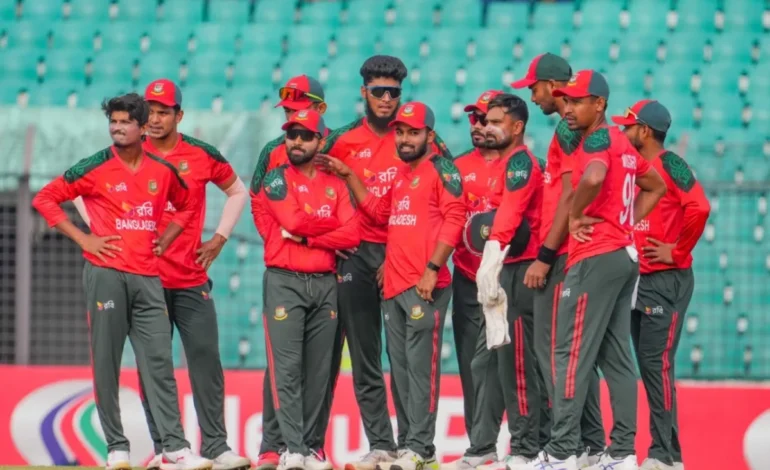

Bangladesh Replaced by Scotland in ICC Men’s T20 World Cup After Venue Dispute
Bangladesh have been officially replaced by Scotland in the forthcoming ICC Men’s T20 World Cup, co-hosted by India and Sri Lanka, following a prolonged standoff between the Bangladesh Cricket Board (BCB) and the International Cricket Council (ICC) over match venues and security concerns.
The decision, formally announced on Saturday, marks a dramatic and unprecedented moment in Bangladesh’s cricketing history. It will be the first time since 1999 that Bangladesh will miss a men’s World Cup in either the 50-over or T20 format.
ICC Confirms Bangladesh’s Withdrawal
In a statement issued on Saturday, the ICC confirmed that Bangladesh would no longer participate in the tournament after the BCB refused to comply with the published match schedule.
“It was formally announced on Saturday that Bangladesh will no longer compete in the upcoming ICC Men’s T20 World Cup, after the Bangladesh Cricket Board refused to participate in the tournament per the published match schedule,” the ICC said in its press release.
Bangladesh had been drawn in Group C and were scheduled to play their first three matches in Kolkata, followed by a fourth match in Mumbai. Scotland, the highest-ranked team not to have qualified for the tournament, will now take Bangladesh’s place in those fixtures.
Security Concerns at the Heart of the Dispute
The standoff stemmed from Bangladesh’s refusal to play matches in India, citing security concerns amid strained diplomatic relations between the two neighbouring countries. The BCB requested that its matches be shifted entirely to Sri Lanka, the tournament’s co-host, or alternatively sought a group change that would allow them to avoid India altogether.
The ICC, however, rejected both proposals.
According to the ICC, extensive security assessments conducted by internal and external experts found no credible or verifiable threat to the Bangladesh team, officials, or supporters in India.
“The ICC’s assessments concluded that there was no credible or verifiable security threat to the Bangladesh national team, officials or supporters in India,” the governing body stated.
The ICC also noted that it was not feasible to alter venues or group compositions so close to the tournament’s scheduled start on February 7.
Dialogue Between ICC and BCB Fails
The ICC detailed a prolonged consultation process with the BCB, which lasted more than three weeks and involved multiple rounds of discussions.
“The decision follows an extensive process undertaken by the ICC to address concerns raised by the BCB regarding the hosting of its scheduled matches in India,” the ICC said.
“Over a period of more than three weeks, the ICC engaged with the BCB through multiple rounds of dialogue conducted in a transparent and constructive manner, including meetings held both via video conference and in-person.”
Despite these efforts, the two sides failed to reach a compromise. The ICC reiterated that it had shared detailed security and operational plans, including enhanced and escalating security protocols, and that these assurances were repeated at several stages of the discussions.
Government and BCB Stand Firm
The BCB had been given an ultimatum to consult with the Bangladesh government by Thursday regarding its decision to travel to India. However, both the government and the BCB confirmed that Bangladesh would not travel to India for the tournament.
Law adviser Asif Nazrul reiterated the government’s stance earlier in the week, stating that national security considerations could not be ignored.
The firm position ultimately left the ICC with little room to manoeuvre, leading to the unprecedented decision to replace a full-member nation with an associate team.
Political Tensions Add Complexity
The cricketing dispute unfolded against the backdrop of strained political relations between Bangladesh and India following a series of developments in recent months.
Relations deteriorated after the fall of former prime minister Sheikh Hasina, who fled to India amid a student-led mass uprising on August 5, 2024. Dhaka has since repeatedly called on New Delhi to send her back, a request India has not acted upon.
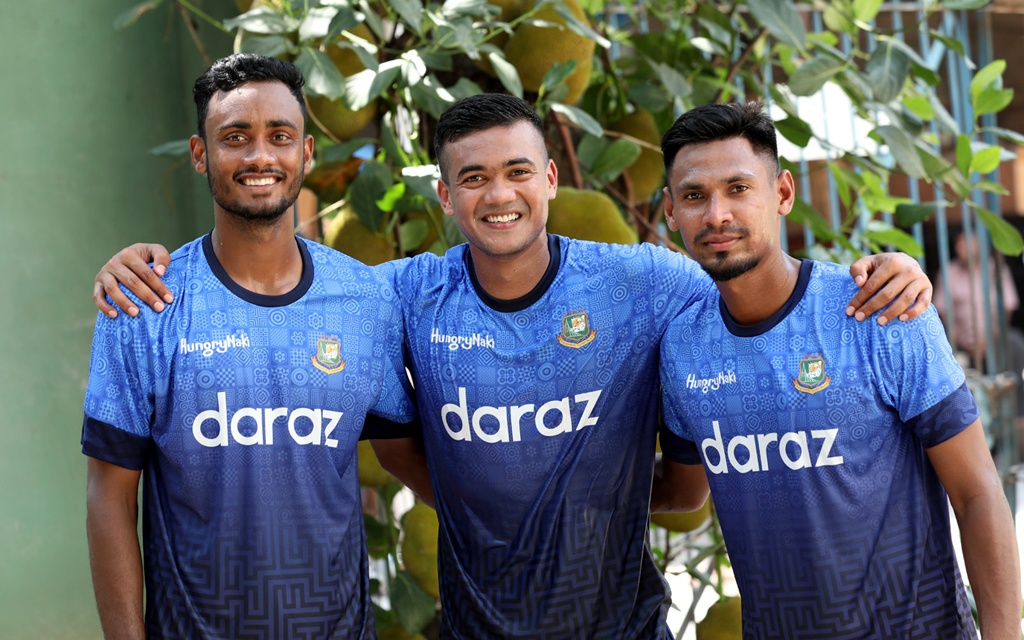
Tensions escalated further on January 3 when the Board of Control for Cricket in India (BCCI) instructed Indian Premier League franchise Kolkata Knight Riders to release Bangladeshi fast bowler Mustafizur Rahman. His removal followed online outrage by right-wing Indian groups alleging attacks on minority communities in Bangladesh, claims Dhaka has said were exaggerated by sections of Indian media.
While the ICC maintained that politics did not influence its decision, the broader geopolitical context complicated the situation.
Allegations of Double Standards
The BCB has accused the ICC of applying double standards, pointing to the precedent set for Pakistan and India in recent tournaments.
Bangladesh’s appeal referenced the hybrid model adopted for the 2025 Champions Trophy, under which India refused to travel to Pakistan and instead played all its matches in Sri Lanka.
BCB president Aminul Islam criticised the ICC’s refusal to extend similar flexibility to Bangladesh.
“The ICC has shown double standards in handling our case compared to how it dealt with India’s refusal to travel to Pakistan,” Aminul Islam said.
The ICC countered that the circumstances were different and that logistical constraints made changes impossible at such a late stage.
Scotland Step In
Scotland, who narrowly missed direct qualification, will now benefit from the reshuffle. As the highest-ranked non-qualified team, they were selected to replace Bangladesh in accordance with ICC tournament regulations.
For Scottish cricket, the decision represents a major opportunity to compete on the global stage, while for Bangladesh it is a significant setback both competitively and symbolically.
Potential Legal Route
The BCB has indicated that it intends to pursue the matter further by approaching the ICC’s Dispute Resolution Committee, an independent panel established to address disputes between member boards.
While such a move could bring further scrutiny to the decision-making process, it is unlikely to reverse Bangladesh’s exclusion given the tournament’s imminent start.
A Historic Absence
Bangladesh’s absence from the T20 World Cup will be deeply felt by players and supporters alike. Since gaining ODI status and later full membership, Bangladesh have been a regular presence at ICC events, using global tournaments to accelerate their development as a cricketing nation.
Missing out on a World Cup for the first time in over two decades represents a significant moment for the sport in Bangladesh, raising broader questions about governance, diplomacy, and the intersection of cricket and geopolitics.
As the tournament approaches, attention will now shift to how Scotland perform in their unexpected return to the world stage, while Bangladesh confronts the long-term implications of a decision that has reshaped the competition and sparked debate across the cricketing world.