

Bangladesh Plans Vaccination Cards for Animals to Strengthen Disease Control

Bangladesh Moves to Introduce Vaccination Cards for Animals
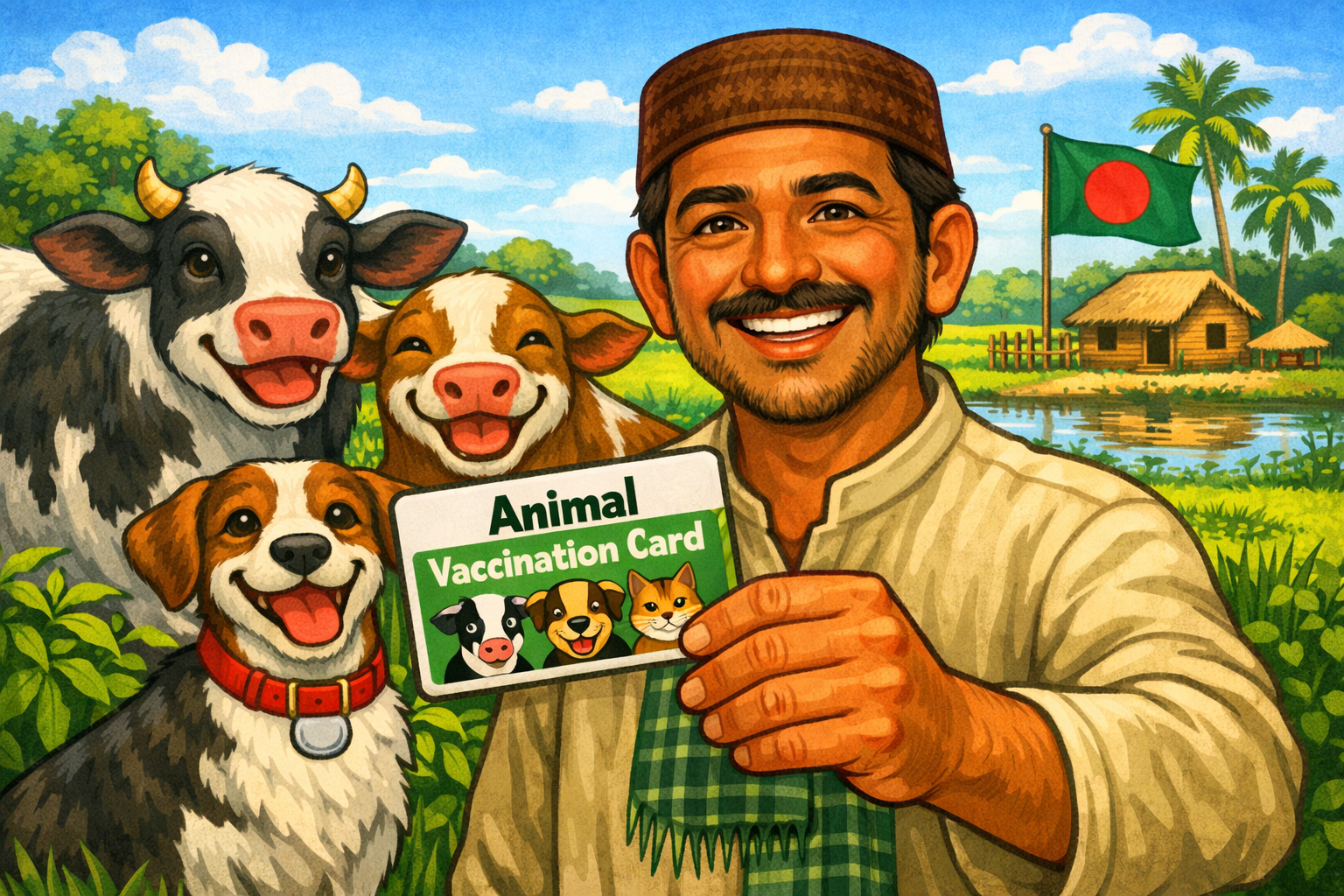
Bangladesh is taking a significant step toward strengthening its livestock sector with a new initiative to introduce vaccination cards for animals. The move, led by the Department of Livestock Services, aims to improve disease control, enhance food safety, and modernize animal health management across the country.
As livestock farming continues to play a crucial role in Bangladesh’s rural economy, the introduction of vaccination cards is expected to bring greater transparency, accountability, and efficiency to the sector.
Why Vaccination Cards Are Being Introduced
The government’s plan to introduce vaccination cards comes in response to long-standing challenges in managing livestock diseases. Farmers often struggle to maintain proper vaccination records, leading to gaps in immunization and increased vulnerability to outbreaks.
With vaccination cards, each animal will have a documented health record, including details of vaccines administered, dates, and upcoming schedules. This system will help farmers and veterinary officials ensure that animals receive timely vaccinations.
More importantly, it will allow authorities to monitor disease patterns and respond quickly to potential outbreaks, reducing the risk of widespread infections.
Strengthening Disease Control in Livestock
Livestock diseases such as foot-and-mouth disease, avian influenza, and others have historically posed serious threats to Bangladesh’s agricultural economy. These diseases not only affect animal health but also disrupt milk, meat, and egg production.
By implementing vaccination cards, the government aims to create a more structured immunization system. This will make it easier to track which animals have been vaccinated and identify those at risk.
Improved disease control will also help protect farmers from financial losses, as healthier livestock means higher productivity and income.
A Step Toward Safer Food Supply
Food safety is another key reason behind this initiative. With growing concerns over the quality of meat and dairy products, ensuring that animals are properly vaccinated is essential.
Vaccination cards will provide traceability, allowing authorities and consumers to verify the health status of livestock. This can play a crucial role in building public trust in locally produced food.
In the long term, this system could also support Bangladesh’s efforts to expand its agricultural exports by meeting international health and safety standards.
Digital Transformation of Livestock Management
The introduction of vaccination cards is also part of a broader push toward digitalizing Bangladesh’s agriculture sector. Authorities are considering integrating these records into a digital database, making it easier to store, access, and analyze information.
Such a system would enable real-time monitoring of livestock health and improve coordination between farmers, veterinarians, and government agencies.
Digital records could also reduce paperwork, minimize errors, and ensure that critical data is not lost or misreported.
Benefits for Farmers
For farmers, especially those in rural areas, vaccination cards could become a valuable tool for managing livestock more effectively.
Firstly, it provides a clear vaccination schedule, helping farmers avoid missed doses. Secondly, it serves as proof of proper animal care, which can be beneficial when selling livestock or seeking financial support from banks or microfinance institutions.
Additionally, healthier animals mean better productivity, higher milk yields, improved meat quality, and lower mortality rates. This directly contributes to increased income and improved livelihoods for farming communities.
Challenges in Implementation
Despite its potential benefits, implementing vaccination cards nationwide will not be without challenges.
One of the primary concerns is awareness. Many small-scale farmers may not fully understand the importance of maintaining vaccination records. extensive awareness campaigns will be needed to educate farmers about the benefits of the system.
Infrastructure is another issue. Ensuring that veterinary services reach remote and char areas remains a challenge. Without proper access to vaccines and trained personnel, the effectiveness of the system could be limited.
There are also logistical considerations, such as printing, distributing, and maintaining the cards, especially in rural regions with limited resources.
Role of Government and Stakeholders
The success of this initiative will depend heavily on collaboration between government agencies, farmers, and private stakeholders.
The Department of Livestock Services is expected to lead the implementation process, including training veterinary staff, distributing vaccination cards, and monitoring progress.
Non-governmental organizations and agricultural extension services can also play a key role in raising awareness and supporting farmers in adopting the new system.
Cards introduced by Govt
The government has introduced or announced at least three specific types of service cards as part of his government’s social safety net and development initiatives.
- Family Card: Launched on March 10, 2026, this is his flagship program aimed at providing monthly allowances of Tk 2,500 to marginalized households. The program initially distributed cards to approximately 37,567–37,814 women in its pilot phase, with a long-term goal of covering 40 million (4 crore) households across Bangladesh.
- Farmer’s Card: Formally to be launched on April 14, 2026 (Pahela Baishakh), this card is designed to provide financial and technical support to farmers, including monthly assistance and access to discounted agricultural inputs like fertilizers and seeds.
- Sports Card: Inaugurated on March 30, 2026, this initiative provides allowances to athletes, with an initial group of 129 athletes honored and a total of 500 athletes set to receive support.
Future Outlook
The introduction of vaccination cards marks an important milestone in Bangladesh’s efforts to modernize its livestock sector. If successfully implemented, the system could significantly reduce disease outbreaks, improve food safety, and enhance the overall efficiency of livestock management.
In the future, this initiative could evolve into a fully digital animal identification and tracking system, aligning Bangladesh with global best practices in livestock management.
Such advancements would not only benefit farmers but also strengthen the country’s agricultural economy and ensure sustainable growth in the sector.
In a Nutshell
Bangladesh’s move to introduce vaccination cards for animals reflects a forward-thinking approach to addressing long-standing challenges in the livestock sector. By improving disease control, ensuring food safety, and supporting farmers, the initiative has the potential to create a more resilient and productive agricultural system.
While challenges remain, effective implementation and strong stakeholder collaboration could make this initiative a game-changer for livestock farming in Bangladesh.