



Bangladesh Finish Fifth in Asian Games Hockey Qualifiers but Secure Qualification


Bangladesh Finish Fifth in Asian Games Hockey Qualifiers but Secure Qualification
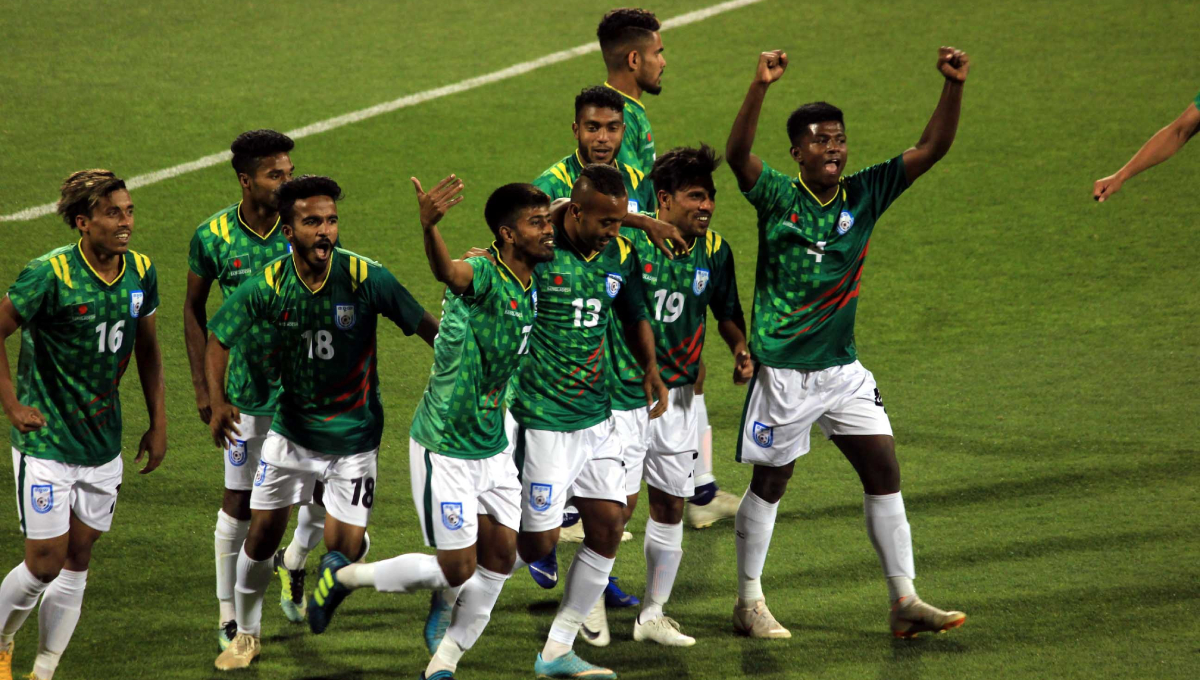
Bangladesh’s men’s hockey team ended their campaign of the 2026 Asian Games Qualifiers with a 3-2 win over Chinese Taipei and secured fifth-place finish, closing out the tournament on a positive note while successfully securing qualification for the main event in Japan.
Despite falling short of semifinal expectations, Bangladesh achieved their primary objective as they booked a place in the upcoming Asian Games, highlighting both resilience and areas for improvement in a challenging campaign.
The tournament, held in Bangkok, Thailand, featured nine teams competing for six qualification spots. Bangladesh’s journey was anything but straightforward, involving setbacks, pressure-filled matches, and a dramatic playoff that ultimately ensured their progression.
Strong Finish Against Chinese Taipei
Bangladesh wrapped up their campaign with a hard-fought victory over Chinese Taipei in the fifth-place decider at the Royal Thai Air Force Hockey Field.
Defender Ashraful Islam played a pivotal role, scoring twice from penalty corners in the seventh and 17th minutes to give Bangladesh early control of the match. However, Chinese Taipei responded strongly, with Cheng-Ze Wei and Hao-Kai Lo scoring field goals to level the game.
The decisive moment came in the 38th minute when Mehrab Hasan Samin found the net with a field goal, sealing Bangladesh’s victory and confirming their fifth-place finish.
The match reflected Bangladesh’s overall tournament pattern, moments of dominance mixed with defensive lapses, but ultimately enough quality to secure results when it mattered.
Qualification Secured Amid Pressure
While the fifth-place finish may appear modest, it was sufficient to secure Bangladesh’s place in the 2026 Asian Games, as the top six teams from the qualifiers advanced to the main tournament in Aichi–Nagoya, Japan.
Bangladesh’s qualification was confirmed earlier in the tournament after a dramatic playoff victory over Hong Kong. The match ended 4-4 in regulation time before Bangladesh triumphed 3-2 in a tense penalty shootout.
That result proved to be the turning point in their campaign, keeping alive their long-standing record of consistent participation in the Asian Games.
In fact, Bangladesh have not missed the Asian Games since 2002, underlining the importance of maintaining continuity at the continental level.
A Mixed Group Stage Campaign
Bangladesh began their campaign with promise, registering a 4-3 win over Chinese Taipei in their opening Pool B match.
However, momentum quickly faltered. A narrow 3-2 defeat to Sri Lanka exposed defensive vulnerabilities, while a 1-1 draw against Uzbekistan in the final group match proved costly.
Both Bangladesh and Uzbekistan finished with four points, but Uzbekistan advanced to the semifinals on goal difference, leaving Bangladesh to fight through the classification rounds for qualification.
The draw against Uzbekistan was particularly frustrating, as Bangladesh failed to convert multiple penalty corners, a recurring issue throughout the tournament that limited their ability to control matches.
Failure to Reach Semifinals: A Reality Check
For a team that finished as runners-up in previous editions of the qualifiers, failing to reach the semifinals marked a significant dip in performance.
Bangladesh had entered the tournament with expectations of competing for the title, having previously won the qualifiers in 2006 and 2014 and consistently finished among the top teams.
However, the 2026 edition exposed gaps in consistency, tactical execution, and finishing efficiency.
The inability to capitalize on scoring opportunities particularly penalty corners proved to be a major weakness. In modern hockey, where set-pieces often determine outcomes, Bangladesh’s inefficiency in this area repeatedly put them under pressure.
Resilience in Crucial Moments
Despite their struggles, Bangladesh demonstrated resilience when it mattered most.
The playoff victory over Hong Kong, achieved under intense pressure, showcased the team’s mental strength. Goalkeeper Biplob Kujur’s crucial saves in the shootout and the composure of the players in decisive moments highlighted their ability to perform under stress.
Similarly, their win over Chinese Taipei in the fifth-place match reflected their determination to finish the tournament strongly rather than bow out on a disappointing note.
These performances suggest that while Bangladesh may lack consistency, they possess the character required to compete in high-stakes situations.
Regional Competition Intensifies
Another key takeaway from the qualifiers is the rising competitiveness of Asian hockey.
Teams like Sri Lanka and Uzbekistan demonstrated significant improvement, challenging Bangladesh in ways that were less common in previous editions. The defeat to Sri Lanka is a rare result historically, and the inability to overcome Uzbekistan in the group stage highlight the narrowing gap between teams.
Meanwhile, Oman emerged as champions, with Sri Lanka finishing as runners-up, followed by Uzbekistan and Indonesia all securing qualification alongside Bangladesh.
This shifting competitive landscape means Bangladesh can no longer rely on past dominance and must adapt to evolving standards in Asian hockey.
Looking Ahead to the Asian Games
While qualification is an achievement, the Asian Games will present a far greater challenge.
The tournament will feature Asia’s elite hockey nations, and Bangladesh will need significant improvement to compete effectively. Issues such as penalty corner conversion, defensive organisation, and match consistency must be addressed in preparation for the event.
The qualifiers have provided valuable lessons, exposing weaknesses but also offering opportunities for growth.
If Bangladesh can build on their resilience while improving technical execution, they can aim to be more than just participants at the Asian Games.
Qualification with Lessons Learned
Bangladesh’s fifth-place finish in the Asian Games Qualifiers may not reflect their ambitions, but it successfully achieved the primary objective.
The campaign served as both a warning and a learning experience. It highlighted the team’s vulnerabilities while reinforcing their ability to deliver under pressure.
As Bangladesh prepares for the Asian Games, the focus must shift from mere qualification to competitiveness. The foundation is there, but translating it into consistent performance will determine whether they can make a meaningful impact on the continental stage.