




Bangladesh Clinch Inaugural SAFF Women’s Futsal Championship with a Dominant Victory over Maldives
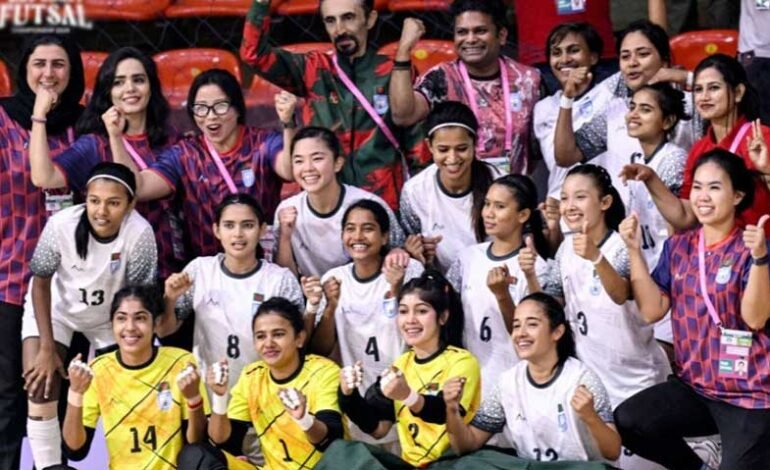
Bangladesh’s women’s futsal team has made history by winning the first South Asian Football Federation (SAFF) Women’s Futsal Championship, overwhelming the Maldives with a 14–2 victory in the final match of the tournament in Bangkok, Thailand. The triumph not only marks an important milestone for women’s futsal in Bangladesh but also underscores the rising standard and competitiveness of women’s football and futsal across South Asia.
The SAFF Women’s Futsal Championship, featuring seven national teams from the region, concluded with Bangladesh at the top of the standings, having collected 16 points from six matches in a round-robin format. Bhutan finished second with 11 points, followed by other participating nations. Bangladesh’s dominance throughout the competition culminated in the emphatic win over the Maldives, showcasing both attacking prowess and tactical maturity.
A Historic Win for Bangladesh Women’s Futsal
Bangladesh’s 14–2 victory was the most emphatic result of the competition’s final day. This result underscores the team’s attacking strength, versatility, and preparation leading up to the championship. Led by some of the nation’s most experienced players, Bangladesh demonstrated a blend of skill, determination, and teamwork across all six matches.
The team’s goals were spread across several key players, including veteran forward Sabina Khatun and attacking midfielder Krishna both of whom have been central figures in Bangladesh’s women’s football scene for years. Their leadership on the futsal court helped the team convert chances efficiently and maintain offensive pressure throughout the tournament.
Bangladesh’s top position in the final table with 16 points reflects consistent performance and tactical dominance. Their balanced approach in possession, sharp finishing, and defensive work rate set them apart from other teams in the competition.
The Importance of the SAFF Women’s Futsal Championship
The inaugural SAFF Women’s Futsal Championship represents a significant step for women’s sports in South Asia, giving female athletes a new platform to compete at a high level and gain international experience. Futsal, a fast-paced, indoor variant of football played on a smaller pitch has grown in popularity globally as a development tool for technical skills and quick decision-making.
South Asian nations, including Bangladesh, Nepal, Bhutan, Maldives, Sri Lanka, Pakistan, and India, have used various international competitions in recent years to improve their women’s teams across different formats. The addition of futsal offers new opportunities for tactical development and talent exposure, complementing traditional football pathways.
In Bangladesh, women’s football has been steadily gaining momentum through SAFF Championship wins, increasing participation at youth levels, and growing representation in regional events. With this futsal title, Bangladesh adds another layer to its record of success in women’s sport.
Leadership and Key Performances
Two veterans Sabina Khatun and Krishna led the charge for Bangladesh. Sabina, who has a strong footballing pedigree and is widely considered one of Bangladesh’s most influential women’s footballers, translated her field experience into futsal success. Her movement off the ball, finishing ability, and leadership were critical in Bangladesh’s overwhelming performance, particularly in the final match.
Krishna also contributed significantly with her attacking play and goal scoring. Together, Sabina and Krishna set the tone for Bangladesh’s tactical setup: press aggressively, control possession, and convert scoring opportunities swiftly. Their experience in outdoor football likely contributed to their success in the indoor variant, demonstrating the fluid transfer of skills between football and futsal formats.
Other players also stepped up throughout the competition, reflecting the depth of talent within the Bangladesh squad. Their cohesive play highlighted the benefits of structured training, rising investment in women’s sports, and increased competitive exposure through regional tournaments.
Women’s Football and Futsal in South Asia
South Asia has seen remarkable progress in women’s football and now futsal, with federations investing more resources into training, competitive fixtures, and youth development programs. Nations like Nepal, Bhutan, and Bangladesh have made notable advances in recent SAFF Football Championships, and the futsal championship adds a fresh chapter to this regional story.
The inclusion of countries with varied footballing histories and resources has enriched competition and raised performance benchmarks. Bhutan’s strong finish with 11 points highlights how even smaller footballing nations are improving rapidly, contributing to the overall competitiveness of women’s futsal in the region.
For Bangladesh, this futsal success builds on a series of recent achievements in women’s football, including noteworthy performances in SAFF events and strides toward qualification for larger continental tournaments. The team’s achievements have attracted attention at both grassroots and professional levels, increasing visibility for women’s sport nationwide.
Futsal’s Role in Football Development
Futsal’s emphasis on tighter ball control, quick transitions, and rapid tactical adjustments has made it a valuable tool in player development globally. Many elite footballers around the world credit futsal with improving their skills at a young age, and national football associations increasingly integrate futsal into training frameworks to refine player technique.
In South Asia, where traditional football infrastructure is still developing in many regions, futsal provides accessible facilities and frequent match opportunities. Indoor surfaces and smaller teams make futsal a practical complement to outdoor football, particularly in urban areas where space can be limited.
Bangladesh’s success in the region’s first women’s futsal championship offers a strong foundation for future talent pipelines and may encourage more participation at school and youth levels. Developing a robust futsal culture could pave the way for technical improvement and global competitiveness as players mature and transition into broader international competition.
What the Victory Means for Bangladesh
Winning the inaugural SAFF Women’s Futsal Championship is more than a trophy for Bangladesh. It symbolizes the expanding opportunities for women in sport, the country’s growing football culture, and the increasing capability of teams to compete at an international level.
Sports officials, coaches, and fans have welcomed the result as a milestone that validates investments in training and talent development. It also reinforces Bangladesh’s position as a rising force in South Asian women’s football and futsal.
Furthermore, this triumph can inspire a new generation of players, especially young girls to pursue sport seriously, knowing there are platforms for recognition and success. Momentum from regional titles often carries forward to broader international engagements, including continental qualifiers and intercontinental tournaments.
Challenges and Future Prospects
While the championship victory is a cause for celebration, the journey ahead involves ensuring sustained development. Investment in youth academies, coaching education, and regular competitive fixtures will be essential to maintain progress.
Moreover, expanding media coverage, sponsorship, and institutional support for women’s football and futsal will help entrench the sport more deeply within Bangladesh’s sporting culture. Exposure to varied international competitors will also test and refine tactical and technical skills beyond the regional stage.
Bangladesh Creates History
Bangladesh’s historic championship win in the SAFF Women’s Futsal Championship represents both sporting excellence and the continued rise of women’s football in South Asia. As the team celebrated with a commanding 14–2 victory over the Maldives, the achievement underscored the potential of futsal as a platform for growth, skill development, and regional pride.
With leaders like Sabina Khatun and Krishna guiding the way, and increasing regional competition strengthening women’s sport, Bangladesh’s accomplishment will be remembered as a defining moment in South Asian football history.


