




Bangladesh Bank Allows Direct Exports Through Amazon, Alibaba, eBay and Etsy
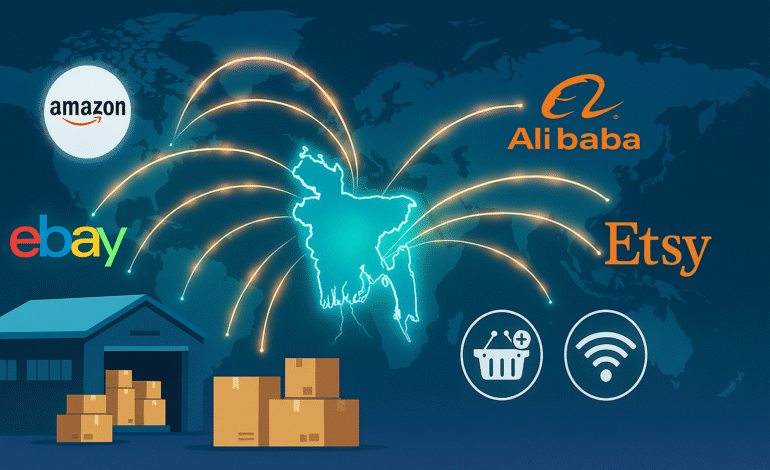
Bangladesh has taken a historic leap toward global digital commerce. In a major policy breakthrough, the Bangladesh Bank has officially permitted local exporters to sell products directly through international online marketplaces, including Amazon, Alibaba, eBay, Etsy, and leading third-party global warehouses.
The policy, announced on 24 November through a circular issued by the Foreign Exchange Policy Department, marks a turning point in the country’s export ecosystem. For the first time, exporters can legally integrate into the world’s biggest e-commerce platforms using a Business-to-Business-to-Consumer (B2B2C) framework.
The decision is widely seen as a catalyst that will elevate Bangladesh’s export competitiveness, open doors for small and medium entrepreneurs, and diversify national earnings in the fast-growing global online retail market.
A New Policy for a New Digital Trade Era
The newly approved framework modernises the traditional export process by aligning it with global e-commerce practices. Under the policy:
-
Exporters can ship goods to foreign consignees—such as Amazon FBA warehouses or third-party logistics hubs—who act as intermediaries, not final buyers.
-
Banks can process export transactions even when the consignee is an online marketplace or logistics provider.
-
Exporters must submit registration proof from the respective marketplace (e.g., Amazon Seller Central, Alibaba storefront).
-
Proforma invoices will be accepted as value declarations since formal sales contracts are not typically used in e-commerce.
This flexible mechanism recognizes the unique dynamics of online global retail, where goods often move to intermediaries before reaching consumers.
Simplifying Export Payments: A Game-Changer for Sellers
One of the most significant reforms is the easing of export earnings repatriation. Exporters can now receive payments through:
-
Regular banking channels
-
International payment service operators (IPSOs) like Payoneer, Stripe, or similar platforms used globally
This brings Bangladesh in line with global e-commerce markets, where digital payments dominate.
To streamline financial settlement, the Bangladesh Bank has also allowed:
-
FIFO (First-In, First-Out) for adjusting multiple shipments paid together
-
Acceptance of shipping documents even when prepared in the name of intermediary platforms
These steps directly address long-standing challenges faced by small exporters who depended on informal channels due to rigid regulations.
What is the B2B2C Export Model — and Why Does It Matter?
The B2B2C model creates a bridge between traditional business-to-business exports and modern business-to-consumer retail. It works as follows:
-
Business (Bangladeshi exporter) ships products to
-
Business (online marketplace / global warehouse) which then sells to
-
Consumer (final international buyer)
This structure is used by global sellers on Amazon, Alibaba, Etsy, eBay and other major platforms.
For Bangladesh, adopting the B2B2C system means exporters can:
-
Store products abroad via Amazon FBA, Etsy fulfillment, or Alibaba logistics
-
Access millions of global customers instantly
-
Reduce shipping delays and improve buyer experience
-
Compete with international brands on equal terms
The model also helps exporters build their own brands instead of working as third-party suppliers to foreign companies.
Why This Policy is a Milestone for Bangladesh’s Export Future
1. Boost for SMEs and Cottage Industries
Small and medium entrepreneurs, especially those producing handicrafts, apparel, home decor, jute products, leather accessories, and organic goods—will now have:
-
Direct access to global marketplaces
-
Lower regulatory barriers
-
Faster and more secure payment channels
This democratizes exports, allowing thousands of micro and small businesses to join the global supply chain.
2. Expanding Market Access Beyond Traditional Buyers
Bangladesh’s export economy has long been dependent on a narrow set of buyers and sectors, such as RMG (ready-made garments).
The new policy opens opportunities in:
-
Handicrafts
-
Lifestyle products
-
Sustainable goods
-
Tech accessories
-
Personal care items
-
Digital-ready consumer items
This diversification is essential to building a robust, future-proof export ecosystem.
3. Higher Earnings Through Value-Added Branding
Selling directly on Amazon or Etsy allows Bangladeshi exporters to:
-
Create their own international brand identity
-
Capture higher margins by bypassing middlemen
-
Build loyal customer bases
When Bangladeshi products enter households worldwide under local brand names, the long-term economic benefits multiply.
4. Strengthening Bangladesh’s Position in Global E-Commerce
With global online retail projected to reach trillions of dollars in the coming years, Bangladesh is now positioned to tap into markets that were previously inaccessible due to regulatory constraints.
This move aligns the country with digital export practices used by:
-
China
-
India
-
Vietnam
-
Indonesia
all of which have rapidly grown their e-commerce exports.
Industry Reactions: “A Transformative Step”
Exporters, analysts, and e-commerce leaders have welcomed the Bangladesh Bank’s policy as “long overdue” and “transformational.”
Many noted that the lack of a formal mechanism for e-commerce exports forced sellers to rely on workaround methods, often risking account restrictions or delayed payments.
This policy eliminates those barriers and ensures:
-
Compliance with global marketplace rules
-
Legal and transparent financial transactions
-
Better integration with cross-border supply chains
The overall sentiment is overwhelmingly positive, with expectations that the next surge of Bangladeshi digital entrepreneurs will now come from rural and SME sectors.
What Happens Next? The Road Ahead
To fully capitalize on the policy, stakeholders highlight several steps:
-
Training exporters on platform requirements (Amazon FBA, Etsy seller standards, etc.)
-
Strengthening logistics channels and cross-border shipping options
-
Promoting product quality certification and branding
-
Encouraging banks to develop specialized e-commerce export services
-
Improving warehousing and packaging facilities within Bangladesh
If these steps are implemented, Bangladesh could emerge as a major player in global e-commerce exports within just a few years.
Bangladesh Finally Joins the Global Digital Marketplace
The Bangladesh Bank’s decision to permit direct exports through Amazon, Alibaba, eBay, Etsy and other global platforms is more than a regulatory update it is the beginning of a new chapter for the nation’s export economy.
By embracing the B2B2C model and simplifying global payment processes, Bangladesh is empowering its entrepreneurs, expanding its market reach, and preparing its industries for a digital future.
The global marketplace is now wide open for Bangladesh and this policy ensures the country is ready to compete, innovate, and thrive.