




Bangladesh Navy Adds Schiebel Camcopter S-100: A Strategic Leap in Maritime Surveillance
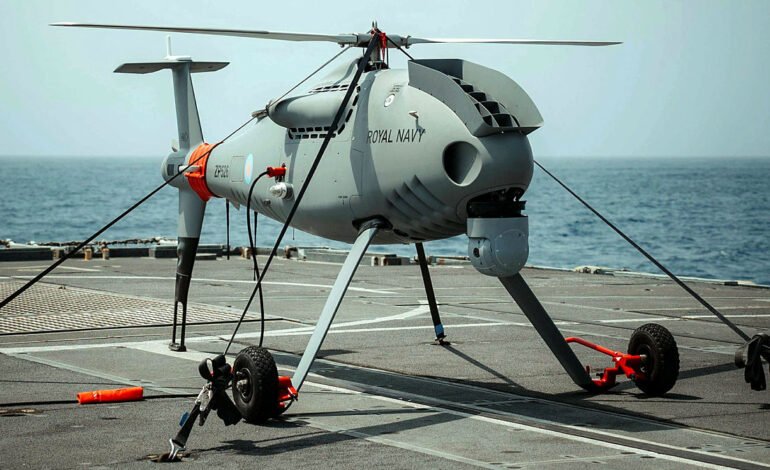

Bangladesh Navy Adds Schiebel Camcopter S-100: A Strategic Leap in Maritime Surveillance
The Bangladesh Navy has strengthened its maritime intelligence and surveillance capabilities with the induction of the Schiebel Camcopter S-100, an advanced unmanned helicopter system known for its reliability, long endurance, and autonomous operations. The acquisition signals Bangladesh’s growing commitment to modernizing its naval forces and enhancing situational awareness across the Bay of Bengal, an increasingly important region for global trade and strategic competition.
As maritime security challenges evolve from illegal fishing and smuggling to geopolitical tensions—Bangladesh’s decision to adopt unmanned aerial systems (UAS) mirrors a broader global trend where navies are shifting toward autonomous and semi-autonomous platforms for precision surveillance and reconnaissance.
What the S-100 Brings to Bangladesh Navy
The Schiebel Camcopter S-100 is a proven, widely deployed unmanned helicopter that can autonomously take off, fly predetermined routes, and land without requiring continuous operator control. Its advanced capabilities represent a major upgrade for Bangladesh’s maritime domain awareness.
Key Operational Features
-
Range: Up to 200 kilometers, enabling the Navy to monitor distant maritime zones
-
Endurance: Approximately 6 hours, allowing extended mission duration
-
Altitude Capability: Operates at around 18,000 feet, providing a wide surveillance footprint
-
Autonomous Systems: Capable of fully automated mission profiles with minimal human intervention
-
Real-Time Intelligence: Equipped with sensors and cameras designed for day-and-night operations
The S-100’s ability to conduct persistent surveillance means the Navy can now monitor coastal areas, shipping routes, and exclusive economic zones more efficiently, especially during joint operations, anti-smuggling efforts, and search-and-rescue missions.
Why This Acquisition Matters for Bangladesh
Bangladesh’s maritime responsibilities have increased significantly over the past decade. Following maritime boundary settlements with India and Myanmar, the country now oversees nearly 118,813 square kilometers of sea area. Ensuring security and resource protection across this vast zone requires modern aerial assets capable of covering large distances with accuracy and endurance.
The S-100 fills a critical capability gap. Unlike traditional aircraft or patrol vessels, unmanned helicopters offer:
-
Lower operational costs
-
24/7 deployability
-
Safer intelligence gathering in challenging environments
-
Ability to integrate with naval ships as a force multiplier
This aligns with the Navy’s long-term modernization plan, Forces Goal 2030, which emphasizes advanced technology, enhanced maritime monitoring, and greater operational flexibility.
Bangladesh Joins a Growing List of Operators
The Schiebel Camcopter S-100 is used by a variety of navies worldwide, including in Europe, Asia, and the Middle East. Its adoption by Bangladesh places the country alongside nations that are increasingly relying on unmanned systems to secure maritime interests.
International Operators Include
-
Australia
-
United Arab Emirates
-
China
-
Italy
-
Germany
-
Myanmar
-
South Korea
The platform’s global acceptance reflects its effectiveness in real-world operations such as border surveillance, anti-piracy missions, and intelligence gathering. Bangladesh’s integration of the S-100 will help synchronize the country’s security standards with modern naval practices.
A Notable Regional Comparison: Myanmar’s Early Use of the S-100
Interestingly, the same drone model has been in service with the Myanmar Navy since 2020. Due to international sanctions on Myanmar, Austria—the S-100 manufacturer’s home country—could not deliver the drones directly. Instead, the units were reportedly delivered to Russia, which then supplied them to Myanmar.
Background Developments in Myanmar’s Case
-
Myanmar expressed early interest in the drone, particularly around 2017, during the peak of the Rohingya crisis.
-
Reports indicate that Swedish company Trakka Systems visited Myanmar to discuss integration of advanced electro-optical cameras and sensors, though the full extent of those discussions remains unclear.
-
Despite the sanctions and lack of transparency, Myanmar ultimately acquired the platform through indirect channels.
For Bangladesh, the procurement process has been straightforward and transparent, reflecting a rules-based, internationally compliant approach to defense modernization.
Boosting Regional Security and Blue Economy Protection
The Bay of Bengal is becoming increasingly competitive, with rising interest from global powers, expanding shipping traffic, and major economic projects such as undersea cables, energy exploration zones, and trade routes.
The S-100 will enable Bangladesh to:
-
Better monitor illegal fishing and resource theft
-
Track suspicious vessels in real time
-
Support disaster response and humanitarian missions
-
Strengthen maritime law enforcement
-
Protect offshore energy infrastructure
Bangladesh’s blue economy potential, which is estimated at billions of dollars, depends heavily on its ability to safeguard territorial waters with modern surveillance tools.
Connecting Bangladesh’s Naval Upgrade to Global Trends
Worldwide, defense modernization is increasingly focused on unmanned systems, driven by budget constraints, safety considerations, and the need for precision surveillance. From the United States to Southeast Asia, navies are supplementing traditional aircraft with drones that offer long endurance and autonomous operation without risking human lives.
Bangladesh’s adoption of the S-100 aligns with:
-
Global movement toward autonomous naval fleets
-
Growing emphasis on low-cost, high-impact defense technologies
-
Eco-friendly and data-driven maritime protection
-
Need to secure global shipping routes passing near Bangladesh
By investing in unmanned aerial systems, Bangladesh positions itself as a responsible stakeholder in regional stability and global maritime governance.
What This Means for Bangladesh Navy
The induction of the S-100 is likely the beginning of a broader shift toward integrating unmanned platforms into Bangladesh’s naval doctrine. Future possibilities include:
-
Additional S-100 units for wider coverage
-
Ship-borne UAS operations from Navy frigates and corvettes
-
Integration with coastal radar and national surveillance grids
-
Potential cooperation with international partners for training and technology exchange
As Bangladesh continues upgrading its navy, unmanned systems will play a central role in shaping a modern, efficient, and globally compatible maritime force.
Conclusion
The Bangladesh Navy’s acquisition of the Schiebel Camcopter S-100 represents a strategic investment in the future of maritime surveillance. With its long-range capabilities, autonomous operation, and global reputation, the S-100 significantly enhances Bangladesh’s ability to monitor its coastal waters, protect its blue economy, and align with international naval standards.
At a time when maritime security is critical to global trade and regional stability, Bangladesh’s move signals both foresight and commitment. The S-100 is more than a drone—it is a step toward a more capable, technologically advanced naval force prepared to meet the challenges of the twenty-first century.