



Three Women Enter Bangladesh’s Political Spotlight

Three Women Enter Bangladesh’s Political Spotlight
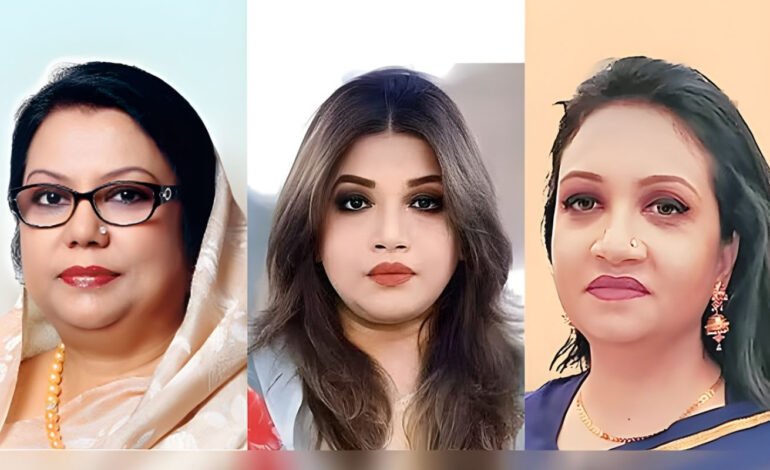
Three women have been appointed to senior roles in the newly formed government cabinet, highlighting both progress in female political participation and the influence of political family legacies. These appointments come in the wake of the Bangladesh Nationalist Party (BNP)’s landslide victory in the February 2026 general election, leading to a new cabinet under Prime Minister Tarique Rahman.
Among the 50 members sworn in as ministers and state ministers, only three are women, all of whom are entering parliament for the first time and stepping into public office following in the footsteps of their fathers, veteran politicians with deep roots in Bangladeshi politics. This development not only marks a personal achievement for the three women but also adds to ongoing conversations about gender representation, political dynasties, and leadership transitions in South Asia’s largest parliamentary democracy.
A Historic Moment: Women in Leadership
The new government has acknowledged these appointments as significant, partly because women make up only about 6% of the cabinet, a number that reflects broader challenges in achieving gender parity in Bangladesh’s political institutions.
Despite this, the elevation of three female leaders each following a legacy of public service stands out for its symbolic and practical implications. All three are first-time Members of Parliament (MPs), elected in the 2026 polls, and have taken on important portfolios that shape national policy in key areas.
Profiles of the Three Women Leaders
Here are the detailed backgrounds of the three women now serving in ministerial roles:
1. Afroza Khanam — Minister of Civil Aviation and Tourism
Afroza Khanam Rita, 63, was elected from Manikganj-3, securing 167,345 votes, and made history as the first woman elected from her constituency since Bangladesh’s independence.
Rita now serves as the Minister for Civil Aviation and Tourism, a key portfolio that oversees air travel regulation, national tourism promotion, and related infrastructure. She also holds leadership roles within the BNP, including serving on the party’s Chairman’s Advisory Council and as convener of the Manikganj district BNP.
Her political journey began under the mentorship of her late father, Harunar Rashid Khan Monno, who served as a four-time MP and cabinet minister in previous BNP administrations. Rita also previously contested national elections and has been active in party affairs for many years.
In addition to her political work, she is the Chairperson of Munna Group of Industries, combining business leadership with political engagement. Her appointment underscores a blend of administrative experience and family legacy in national governance.
2. Shama Obaed Islam — State Minister for Foreign Affairs
Shama Obaed Islam, 52, represents Faridpur-2, where she won 121,994 votes in her first parliamentary contest. She has been appointed State Minister for Foreign Affairs, a role that involves supporting Bangladesh’s diplomatic engagement and international relations.
Shama comes from a family with deep political roots. Her father, KM Obaidur Rahman, was a former BNP Secretary General, a veteran parliamentarian, and a Liberation War organiser who served in previous governments. Her mother, Shaheda Obaid, also has experience in public service, including roles with the Dhaka Board.
Professionally, Shama serves as Managing Director of Elior Builders Ltd, bringing private-sector experience into governance alongside her public service role. Her dual background in business and politics positions her to contribute to Bangladesh’s foreign policy agenda and national image abroad.
3. Farzana Sharmin — State Minister for Women and Children Affairs & Social Welfare
Farzana Sharmin, 41, was elected as MP from Natore-1, winning 102,726 votes on her first attempt. She has been appointed State Minister for Women and Children Affairs and Social Welfare, a portfolio central to advancing gender equity, child rights, and social development programs.
Farzana is a lawyer by profession, practicing at the Bangladesh Supreme Court and holding a postgraduate law degree (LLM) from the University of Dhaka. Her legal background informs her approach to policy and governance, particularly in areas affecting women and children.
She follows the footsteps of her late father, Fazlur Rahman (Patol), who was a three-time MP and former State Minister in earlier governments. Farzana also serves as the joint convener of the Natore district BNP, reflecting her active engagement in party leadership and grassroots politics.
Implications for Female Political Representation
These appointments are notable in several respects:
Gender Representation in Government
Despite their historic significance, women remain underrepresented in Bangladesh’s political institutions. In the 13th Parliament, women make up only about 2.36% of elected MPs, while female cabinet members account for about 6% of the 50-member executive.
Analysts and gender advocates have highlighted that progress on women’s representation has been uneven, with calls for more systemic measures such as legal quotas or targeted recruitment to ensure broader inclusion in decision-making roles.
Political Legacy and Dynastic Influence
The rise of Afroza Khanam, Shama Obaed Islam, and Farzana Sharmin reflects a broader trend of political legacies shaping leadership pathways in Bangladesh. Shared family histories often provide institutional knowledge, networks, and early exposure to national politics. However, this dynamic also raises questions about meritocracy, access, and pathways for emerging leaders without family lineage.
Youth and Experience
While each of the three women has a political family background, they also bring distinct personal experiences in business, law, and party organisation that contribute to their leadership roles:
- Afroza Khanam blends industrial leadership with political coordination experience.
- Shama Obaed Islam integrates private sector leadership with diplomatic responsibilities.
- Farzana Sharmin combines legal expertise with social welfare advocacy.
Their diverse professional competencies highlight that modern political leadership in Bangladesh increasingly intersects civic, professional, and familial influences.
Women in Bangladeshi Politics
Bangladesh has seen prominent women leaders in its history, including Begum Khaleda Zia, the country’s first female prime minister, and Sheikh Hasina, who served long tenures as prime minister through multiple terms.
However, beyond these high-profile figures, female representation in parliament and government cabinets has fluctuated, often depending on wider political dynamics and party priorities. The inclusion of three women in the current cabinet all newly elected MPs, adds a fresh chapter to this ongoing evolution.
Policy Expectations and Public Perception
Public response to these appointments has been mixed but generally hopeful, with civil society advocates welcoming greater female participation while also urging sustained action to expand gender equity in political representation.
Key expectations for the new ministers include:
- Civil Aviation and Tourism: Strengthening Bangladesh’s travel sector and improving regulatory frameworks under Afroza Khanam Rita.
- Foreign Affairs: Enhancing diplomatic engagement and global partnerships with the support of Shama Obaed Islam.
- Women and Children Affairs & Social Welfare: Advancing policies on gender equity, child protection, and community welfare with Farzana Sharmin’s legal insight.
Their performance in these roles will shape both policy outcomes and broader perceptions of women’s leadership in the country.
A Step Forward With Room to Grow
The appointments of Afroza Khanam Rita, Shama Obaed Islam, and Farzana Sharmin as minister and state ministers underscore a nuanced moment in Bangladesh’s political narrative one where political legacy, professional experience, and female leadership converge in service to the nation.
While challenges remain in expanding women’s representation, these three leaders bring a blend of continuity and fresh perspectives to national governance. Their roles in the new cabinet reflect both the progress made and the work that lies ahead in building a more inclusive political landscape in Bangladesh.